Western Meadowlarks in Tarbutt Township
Written by Carter Dorscht, Executive Director
On March 26th, Central Algoma Land Trust member Jane Smith photographed two meadowlarks just down the road from her house in Tarbutt Township. They turned out to be Western Meadowlarks, a different species than the Eastern Meadowlarks that are commonly found in the area every summer.
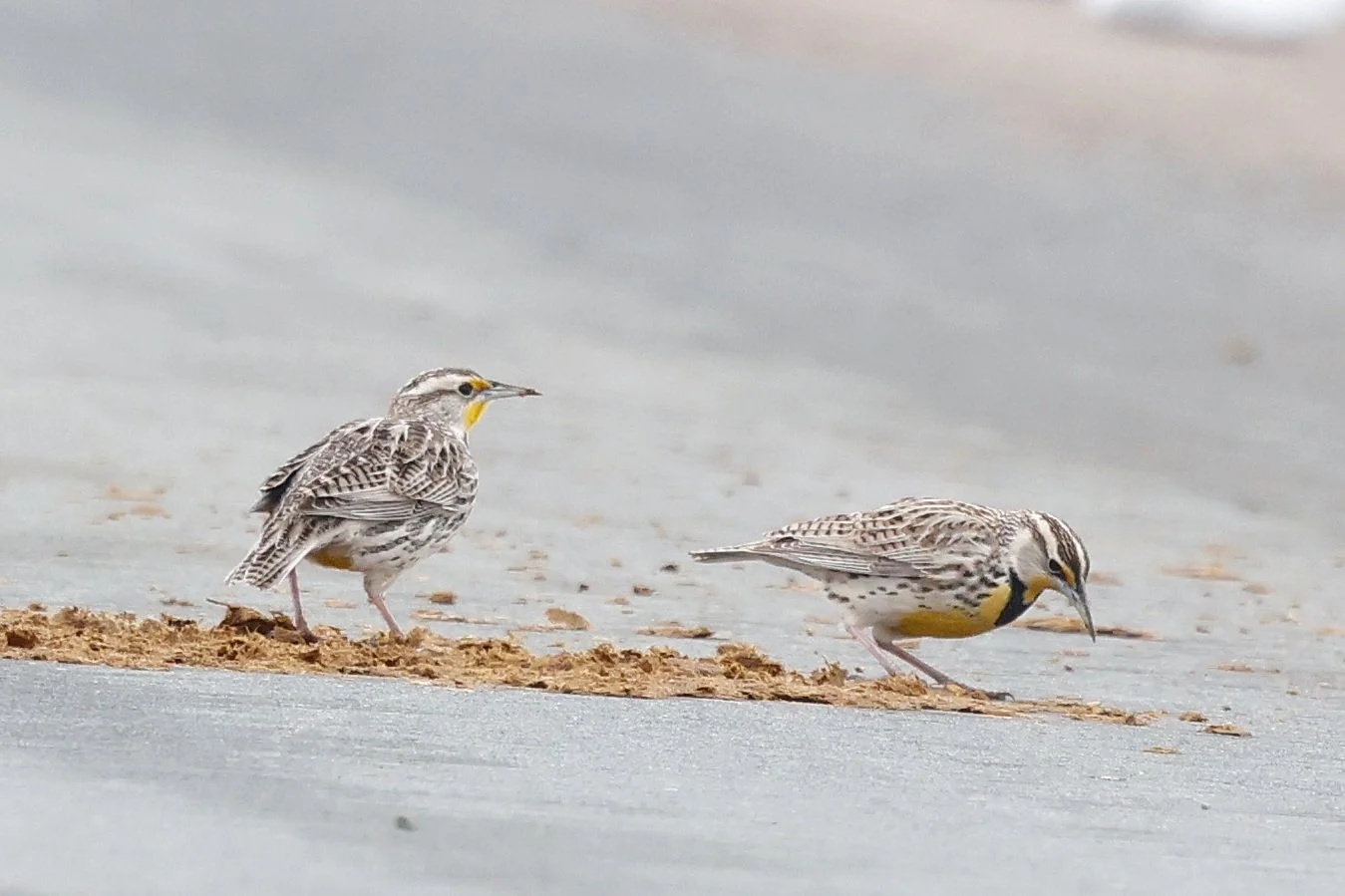
Western Meadowlarks. Photo by Jane Smith
On first glance, these Western Meadowlarks appear very similar to Eastern Meadowlarks. However, they have yellow in the malar (the region of a bird's face located on the side of the lower jaw) more of a distinct barring pattern on the upperside of their middle tail feathers, and appear much paler overall. Their song and call notes are also different.
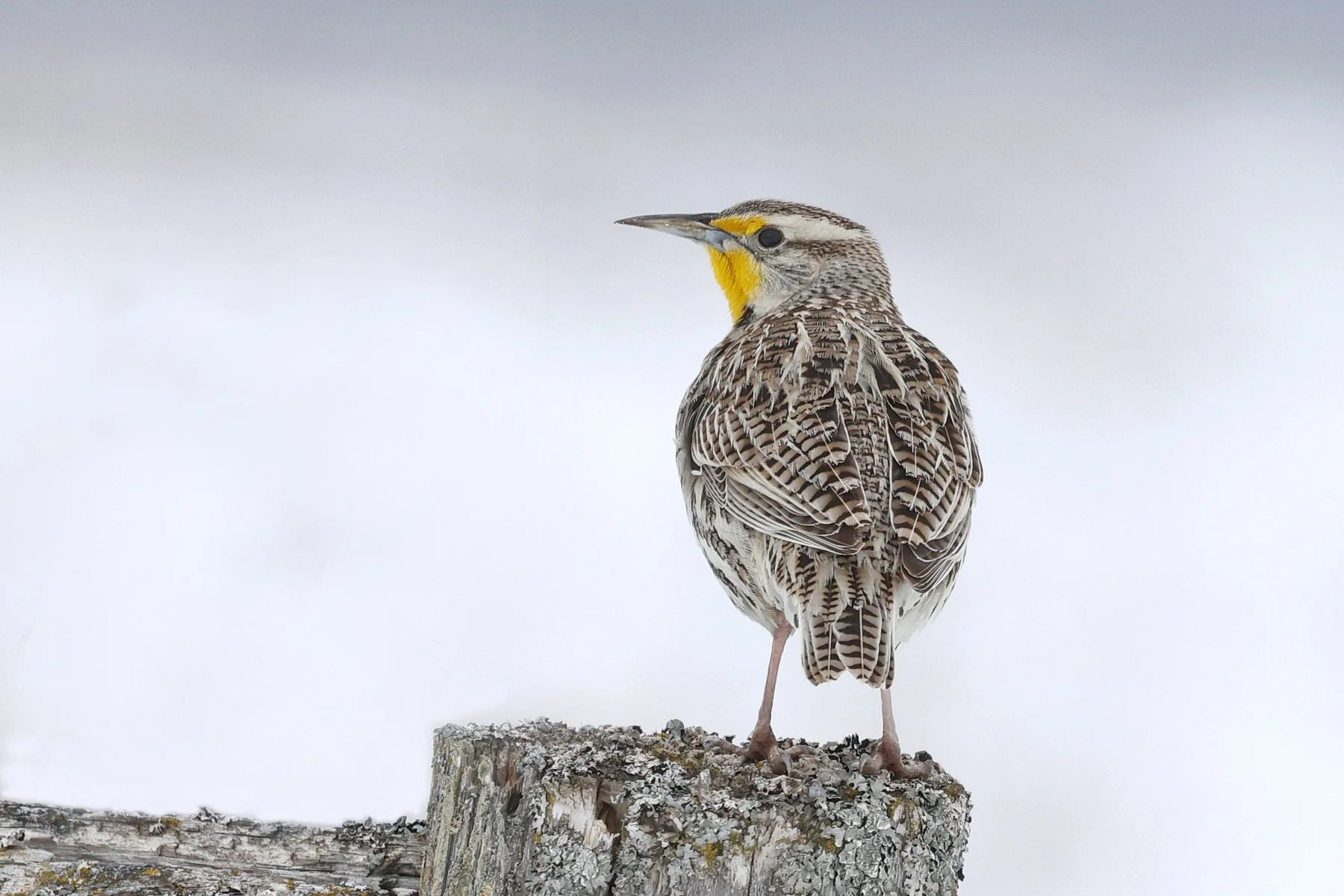
Western Meadowlark. Photo by Jane Smith
The timing of these two birds also fits the pattern of Western Meadowlarks locally. When they show up within the Algoma District, it is often late March or very early April, just before the first Eastern Meadowlarks return.
A Western Meadowlark sighting locally isn’t a major rarity, but Jane’s sighting represents the first documented Western Meadowlarks in the Algoma District since 2020. They are a species that is known to show up a bit further east than expected from time to time.
These birds are unlikely to stick around for the breeding season. They will likely continue on in a westward direction, maybe towards the Rainy River District, which is the only part of Ontario where Western Meadowlarks are commonly known to breed.
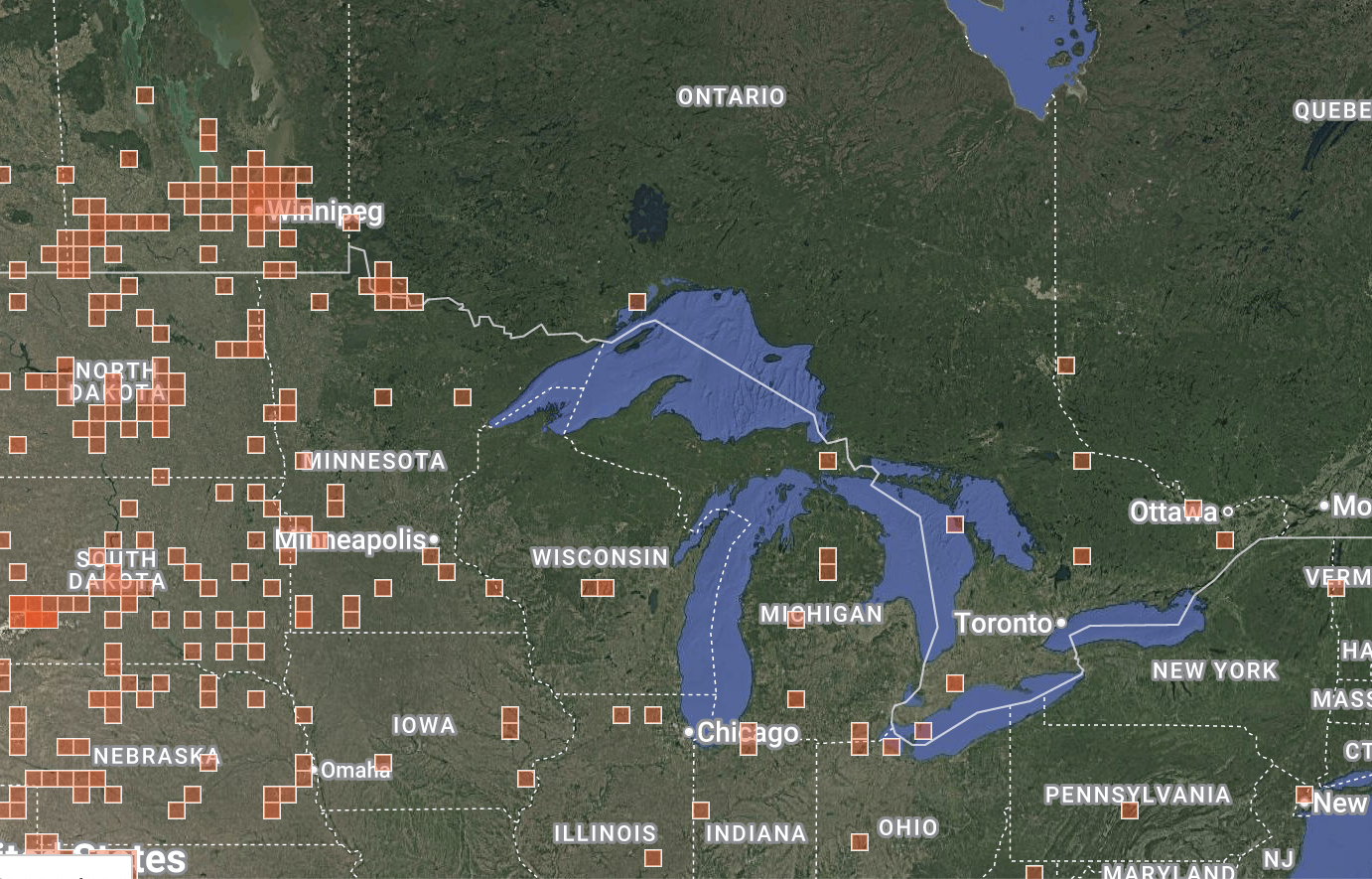
Western Meadowlark observations from June and July (peak breeding season) on iNaturalist. Click here to view interactive map.
In the world of conservation, the Western Meadowlark is not on Ontario’s species at risk list but does have a S1B ranking assigned by the Natural Heritage Information Centre. While Western Meadowlarks are common on the Canadian prairies, the "S1" signifies that it is at an extremely high risk of disappearing from Ontario due to its very limited range within the province. Furthermore, the "B" qualifier specifically highlights that this status applies to its breeding population only.
While I’ve seen many Western Meadowlarks in the Rainy River area, I’ve only seen one before in the Central Algoma region, so I couldn’t pass up the opportunity to go see them myself.
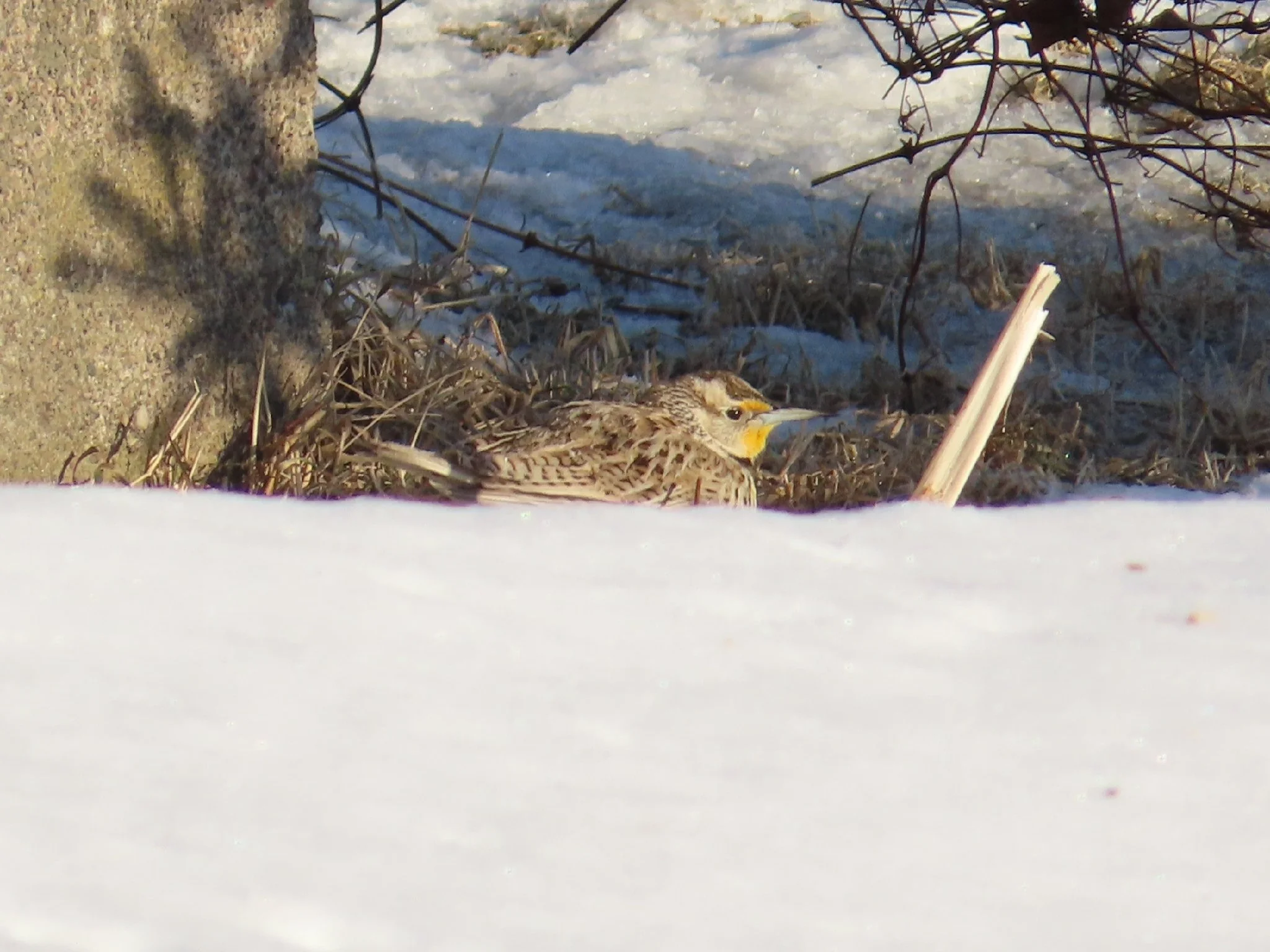
Western Meadowlark. Photo by Carter Dorscht
It appears that I don’t have a lot of great Eastern Meadowlark photos myself, but here’s one that shows only white in the malar and appears a little more vibrant overall.
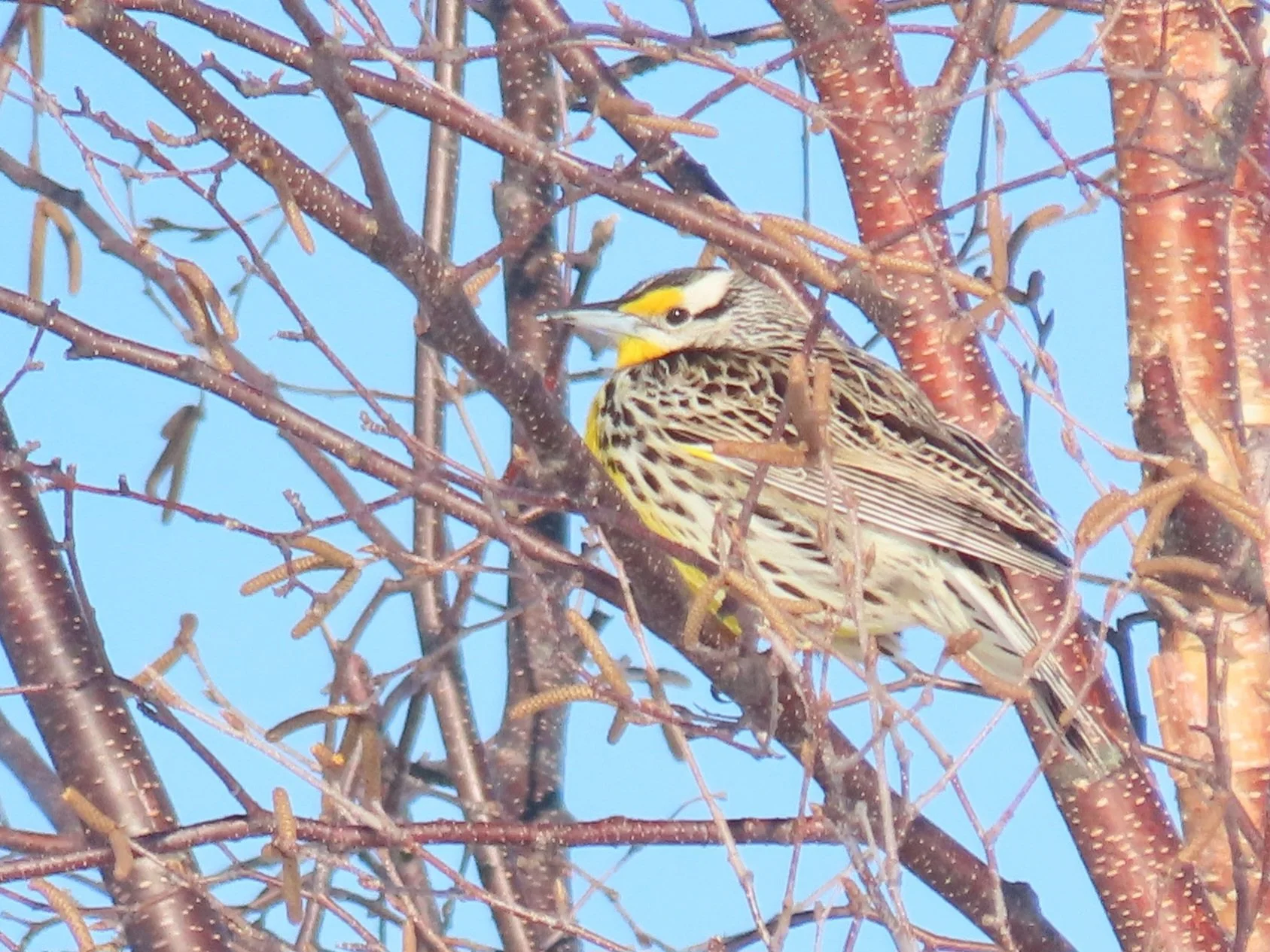
Eastern Meadowlark. Photo by Carter Dorscht
And for those who are interested, here is a map that demonstrates where Eastern Meadowlarks breed.
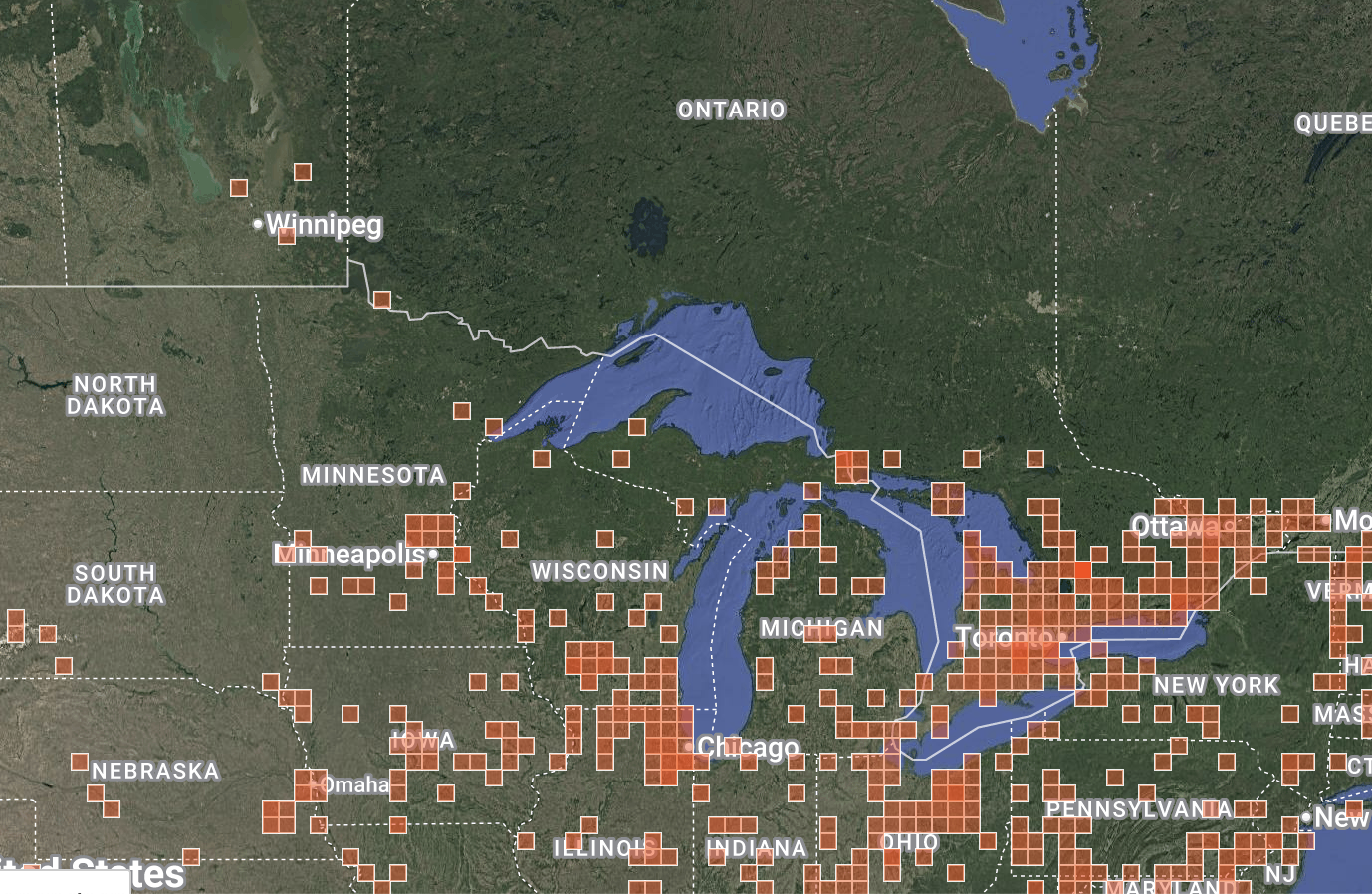
Eastern Meadowlark observations from June and July (peak breeding season) on iNaturalist. Click here to view interactive map.
As we head into April, spring bird migration will increase and there’s potential for other interesting sightings. If you see something interesting or unusual, make sure you submit it!
The Central Algoma Land Trust depends on the generous support of our local community to carry out our work. Please consider making a donation to help advance conservation efforts across the Central Algoma region. Your contribution will help protect the natural spaces and wildlife that make this area so special.