
Bats are Brilliant: Appreciation for the Bat Species of Central Algoma
Written by Kaitlyn Plastino, Bat Monitoring Technician
Up in the sky, look! It’s a bird! No, it’s a plane! No, it’s a… bat?
In the past, seeing a bat instilled fear in the hearts of many cottage goers in the Central Algoma region. The thought of a bat flying into your hair and giving you rabies, their not-so-cute appearance, and their darting and unpredictable flight patterns through the night sky all contributed to their bad reputation.
In recent years, many of us have witnessed a noticeable decline in bat populations across Ontario. What was once a common sight at dusk has become increasingly rare, making a bat sighting nowadays a welcome surprise. As awareness of their decline has grown and public perception has shifted, compassion for these mosquito-eating critters are at an all time high!
In light of this, we’d like to share some fun facts about the eight bat species found in Central Algoma to boost your knowledge and appreciation for these amazing creatures!
1. Did you know that some bats migrate?
Like us humans, some Ontario bat species skip town for the winter and head south for a sunny vacation. The Hoary Bat (Lasiurus cinereus), Eastern Red Bat (Lasiurus borealis), and Silver-haired Bat (Lasionycteris noctivagans) are long-distance migrants that embark on impressive seasonal journeys to escape the cold and find a better source of insects to eat. These tiny travelers can fly thousands of kilometres to places like Florida and Mexico in search of the perfect seasonal getaway.
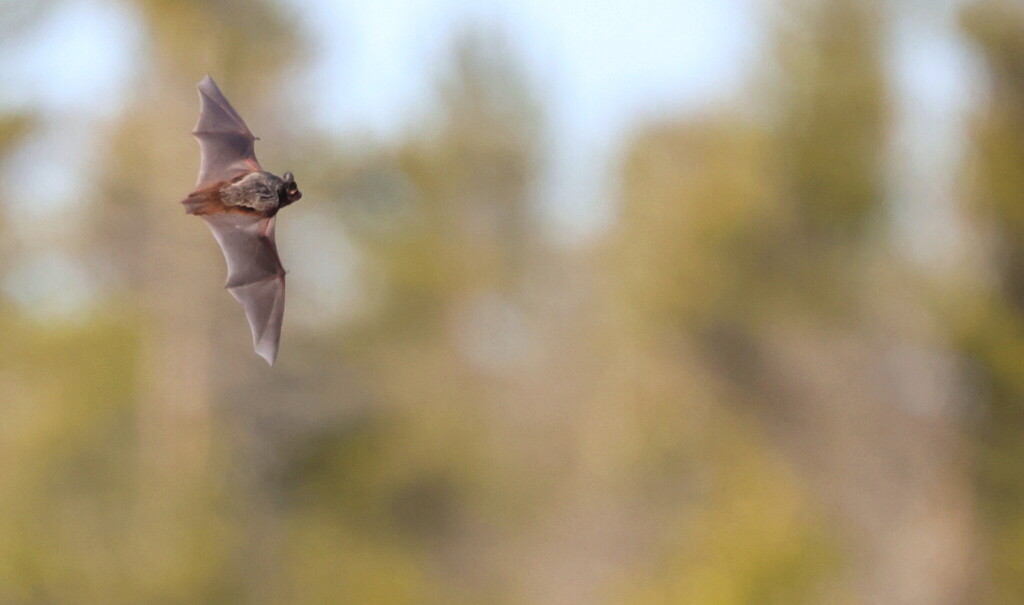
Silver-haired bat (Lasionycteris noctivagans) - Photo by
aaron_graham
View on iNaturalist
2. Bats are highly social animals
Several bat species - including the Big Brown Bat (Eptesicus fuscus), Little Brown Myotis (Myotis lucifugus), and Tri-coloured Bat (Perimyotis subflavus) - form maternity colonies after emerging from hibernation to raise their young. Things can get chaotic when dozens of bats are packed together in one busy nursery, so mother bats quickly become experts in recognising the unique calls and scents of their own pups. Even more amazing, many females return to the very same roost where they were born, year after year, creating a tight-knit family group of mothers, daughters, sisters, and aunts all living together.
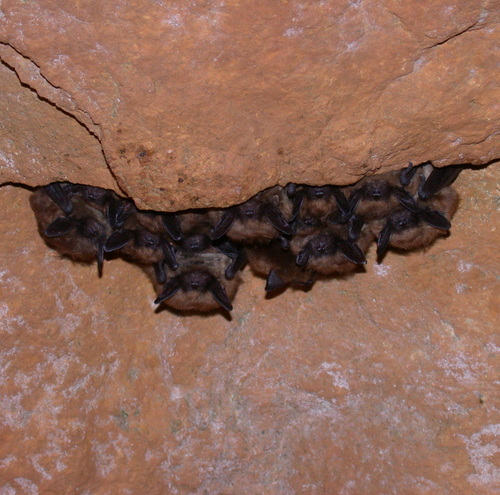
Little brown myotis (Myotis lucifugus) - Photo by
Daryl Coulson
View on iNaturalist
3. Woodpeckers are a bat’s best friend!
The Northern Myotis (Myotis septentrionalis) can be found in forested habitats, relying on cozy tree cavities for their daytime roost. However, they certainly don’t make these homes themselves! Woodpeckers often do the original renovations, drilling large holes into trees while they search for insects. Once the woodpeckers move on, their old carpentry projects become perfect ready-made bat apartments, providing a safe space for their daytime naps.
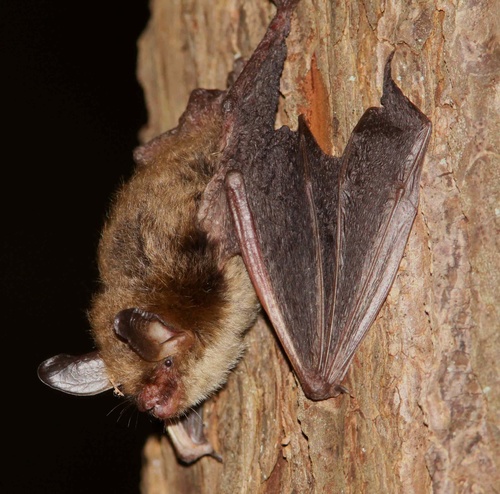
Northern myotis (Myotis septentrionalis) - Photo by
Jason K.
View on iNaturalist
4. Some bats roost in unexpected places like rock faces
Considered one of the rarest bats in Canada, the Eastern Small-footed Bat (Myotis leibii) is between a rock and a hard place - literally! This species prefers to tuck itself away into narrow stone crevices and beneath rocks. Secretive and hard to spot, there is very little known about the Eastern Small-footed Bat in Ontario. Next time you’re out hiking the rocky outcrops of Central Algoma, take a peek between the stones - you might just find a tiny face peering back at you!
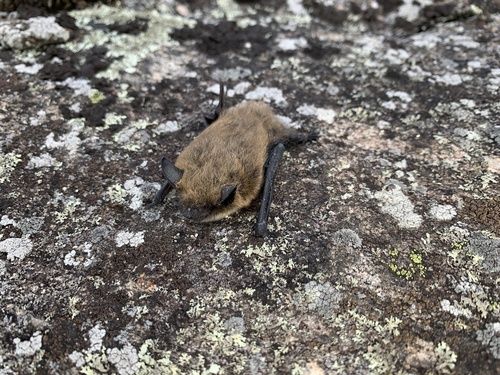
Eastern small-footed bat (Myotis leibii) - Photo by
Matt Brown
View on iNaturalist
So… Where did all the bats go? How we are helping:
White-nose Syndrome (WNS) has been wreaking havoc on Ontario bat populations since the fungus responsible for the disease, Pd (Pseudogymnoascus destructans), was introduced to Canada from Europe around 2009. Pd thrives in the cool, humid environments of bat hibernacula where it grows on the skin of hibernating bats and disrupts their normal hibernation cycles, often leading to significant mortality. Although White-nose Syndrome hasn’t been confirmed in the Sault Ste. Marie region, it has been detected within the Algoma District as early as 2010.
As part of our Bat Monitoring and Education Program, the Central Algoma Land Trust is gearing up to share our bat data with the North American Bat Monitoring Program (NABat). In the near future, researchers and organizations worldwide will be able to access bat data from the Central Algoma region, contributing to a clearer understanding of population trends and supporting more informed management planning.

White-nose Syndrome - Photo by
U.S. Fish and Wildlife Service
Looking to help bats out? Here are some simple steps you can take:
Plant a bat-friendly pollinator garden using local native species that attract night-flying insects. You could aid bats in securing an evening snack!
Deploy a bat house - keep an eye out for bat houses available for purchase, or check out these instructions on how to build your own.
Turn out the light! Keep outdoor spaces dark to encourage bat foraging activity.
Submit a bat sighting to us online, or post your bat observations on iNaturalist.
Join us for a Bat Night, Wednesday, July 22 from 8:30 pm to 10:30 pm (rescheduled from July 15). Please register for the event here if you plan to attend. We hope to see you there!
The Central Algoma Land Trust depends on the generous support of our local community to carry out our work. Please consider making a donation to help advance conservation efforts across the Central Algoma region. Your contribution will help protect the natural spaces and wildlife that make this area so special.
