
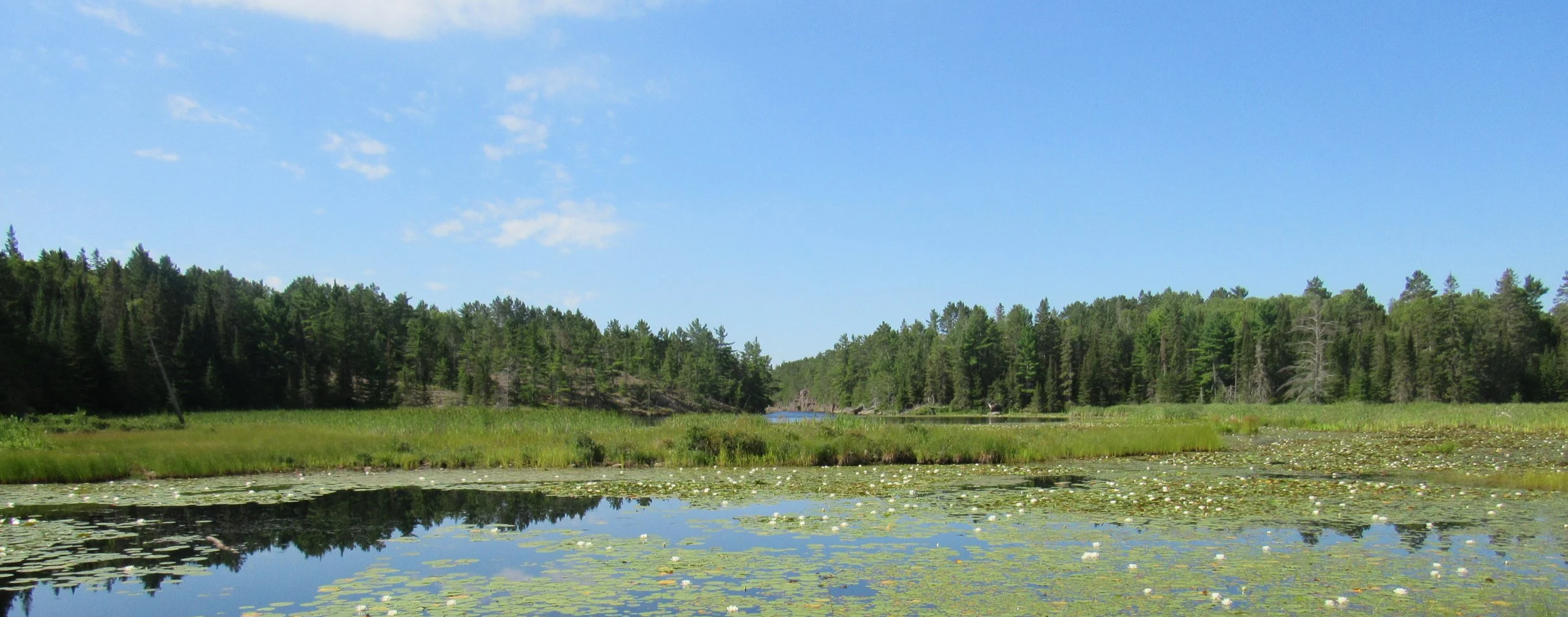
Bat Monitoring and Education Program
This program is designed to fill crucial knowledge gaps about bat populations in both Central Algoma and across the entire Algoma District. Launched in 2022, it combines systematic acoustic surveys with public engagement and education to document when and where bats are active. By listening for the high‑frequency calls bats use to navigate and hunt, our team, volunteers, and community partners contribute valuable data that supports local and broader conservation efforts while learning about these fascinating and ecologically important mammals.
About the Program
In late 2021, we realized we had no data on the bats using our protected areas. To address this, we developed a program to begin collecting this vital information.
Starting in the summer of 2022, we began surveying bats across our protected areas and other key locations using automated bat detection devices. These devices detect high-frequency ultrasonic vocalizations (echolocation) from nearby bats, allowing us to remotely monitor activity. Deployed in the field over extended periods, they provide a consistent, low-disturbance way to document when and where bats are present. Because different species produce distinctive call patterns, the recordings can later be analyzed to identify which bats are using each site and to estimate relative activity levels.
The need for data goes beyond our protected areas—there is a general lack of bat information across the entire Algoma District. As part of this program, we encourage community members to submit their own bat sightings and offer educational resources to highlight the important role bats play in local ecosystems.
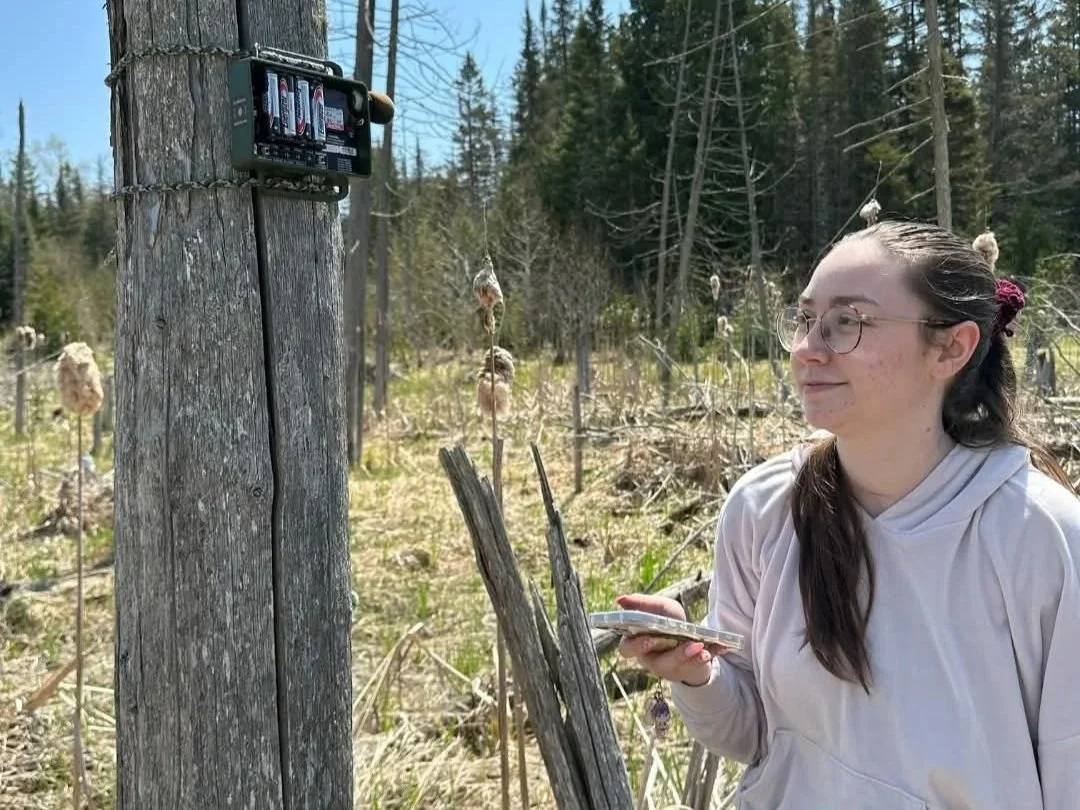
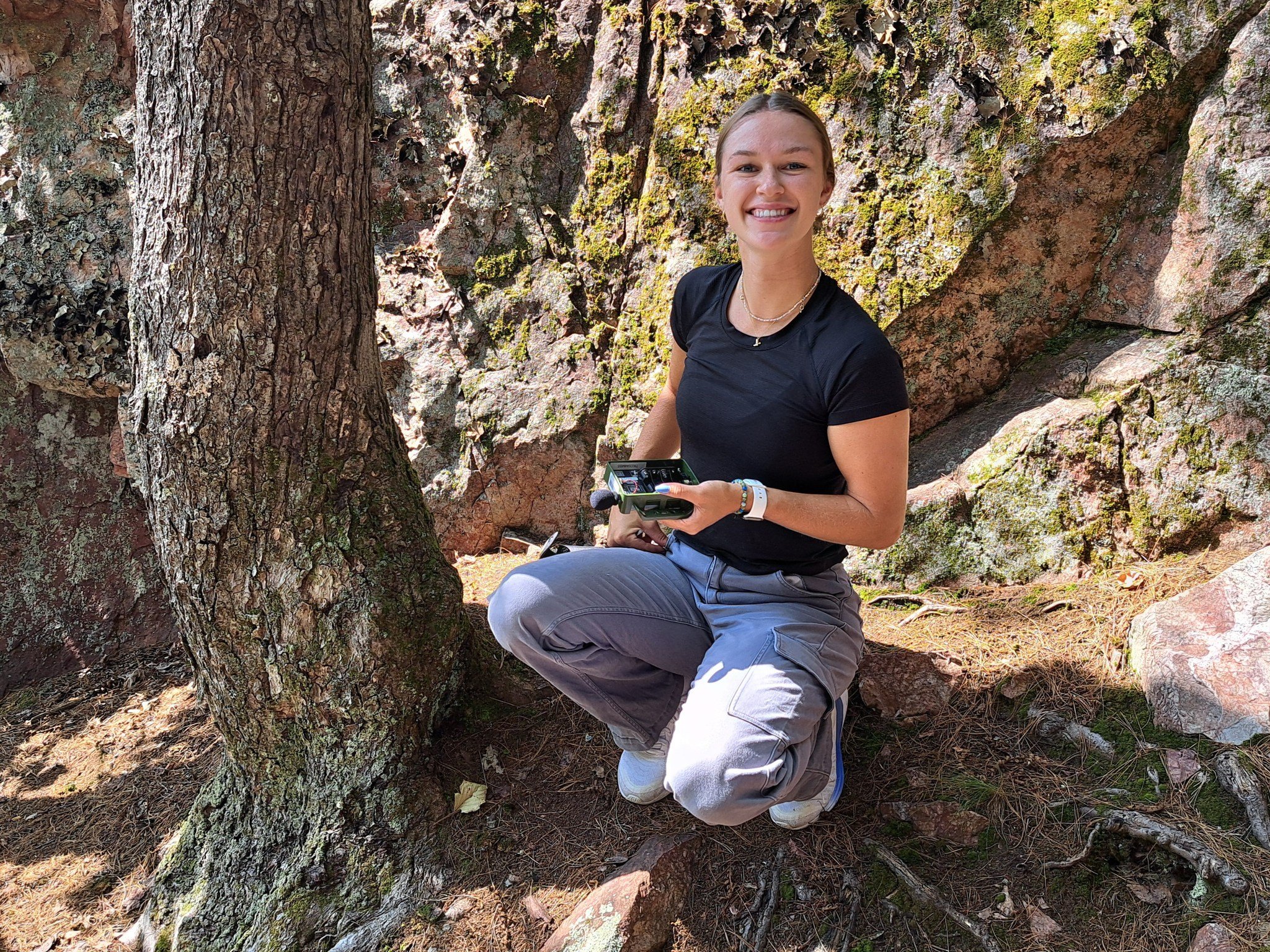
Bat Technician Hailey Frasier checking a bat monitor in 2025
What Bats Are Here?
There are 8 species of bats regularly found in Ontario, all of which have also been documented here in Central Algoma.
Three bat species migrate south for the winter months, spending time in the southern US, Caribbean and Mexico:
Hoary Bat (Lasiurus cinereus)
Eastern Red Bat (Lasiurus borealis)
Silver-haired Bat (Lasionycteris noctivagans)
Five bat species move to hibernation roosts or hibernaculum in the winter months, often located in abandoned mines or natural caves:
Big Brown Bat (Eptesicus fuscus)
Tri-colored Bat (Perimyotis subflavus)
Little Brown Myotis (Myotis lucifugus)
Northern long-eared Myotis (Myotis septentrionalis)
Eastern Small-footed Myotis (Myotis leibii)
Seven of the eight bat species in Ontario are listed as Endangered by the Committee on the Status of Endangered Wildlife in Canada (COSEWIC) and the Committee on the Status of Species at Risk in Ontario (COSSARO). Habitat loss, pesticide use, and the spread of white nose syndrome have all contributed to their decline.
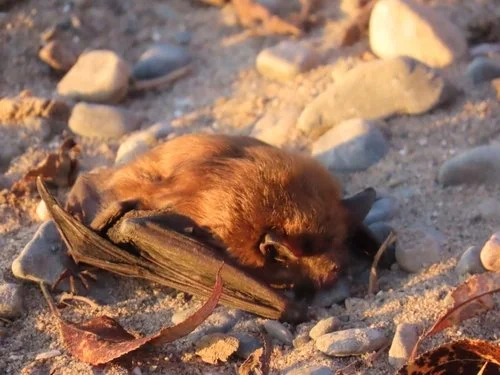
Big Brown Bat © C. Wilkerson
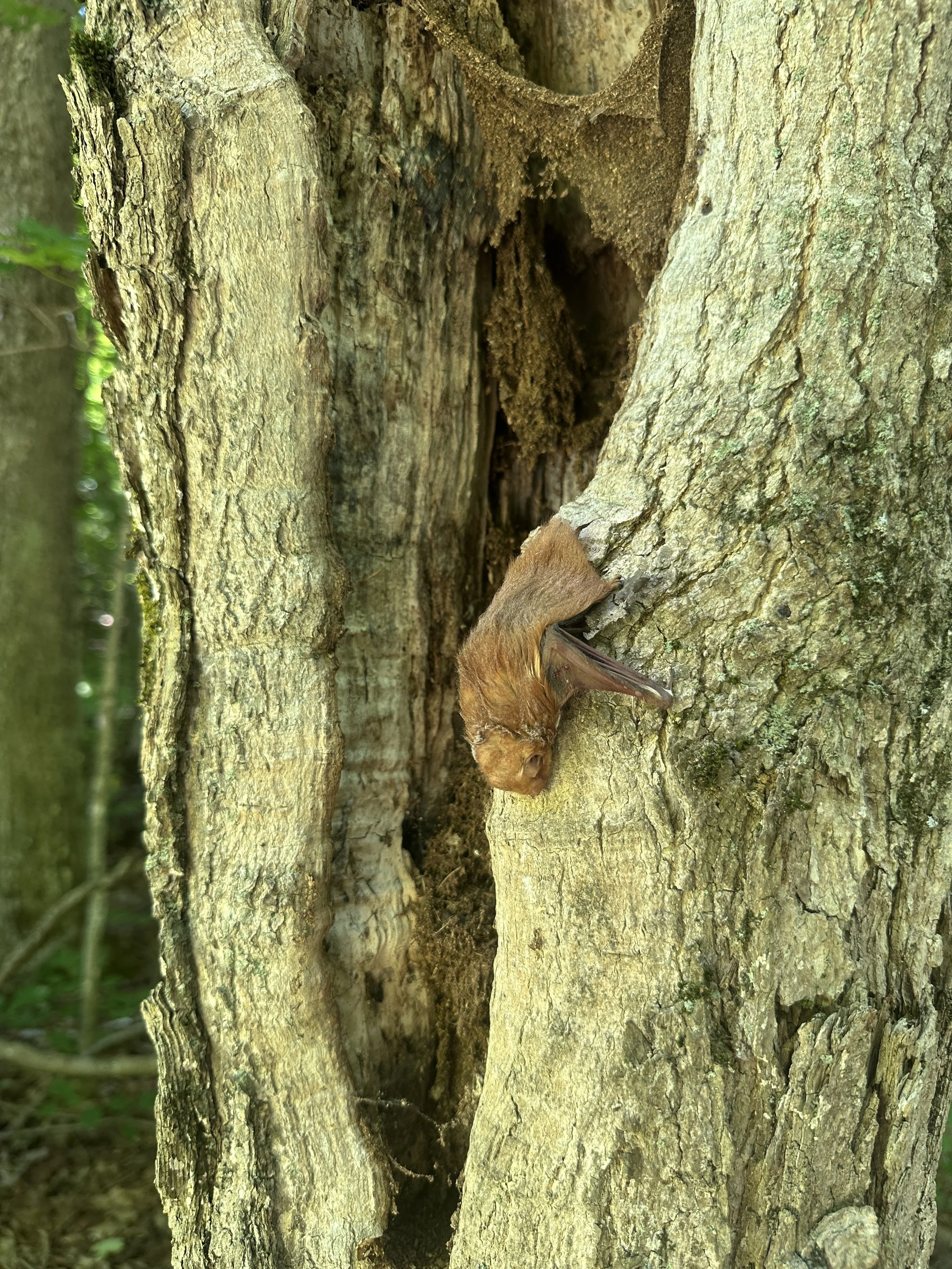
Eastern Red Bat © Z. Lefebvre
How Does It Work?
Echolocation is a strategy used by bats to navigate and characterize elements of their environment. In order to echolocate, most bats produce very high frequency sounds (i.e. ultrasonic) by contracting their larynx (the voice box). By producing these sound waves and listening to the echoes that result, bats can move and hunt in the dark.
Each individual bat species has a unique vocalization (or echolocation frequency), characterized by duration, frequency, and shape, that can be identified using specialized computer software and visualized as a sonogram.
We have deployed remote recording devices that record bat vocalizations over a long period of time. Data is then downloaded at the end of the season and analyzed with specialized software to identify the bat species.
We also monitor bat activity using hand-held bat recording devices that can plug into a cell phone or tablet. These devices record bat vocalizations as they fly overhead and include software that identifies the bat species in real time.
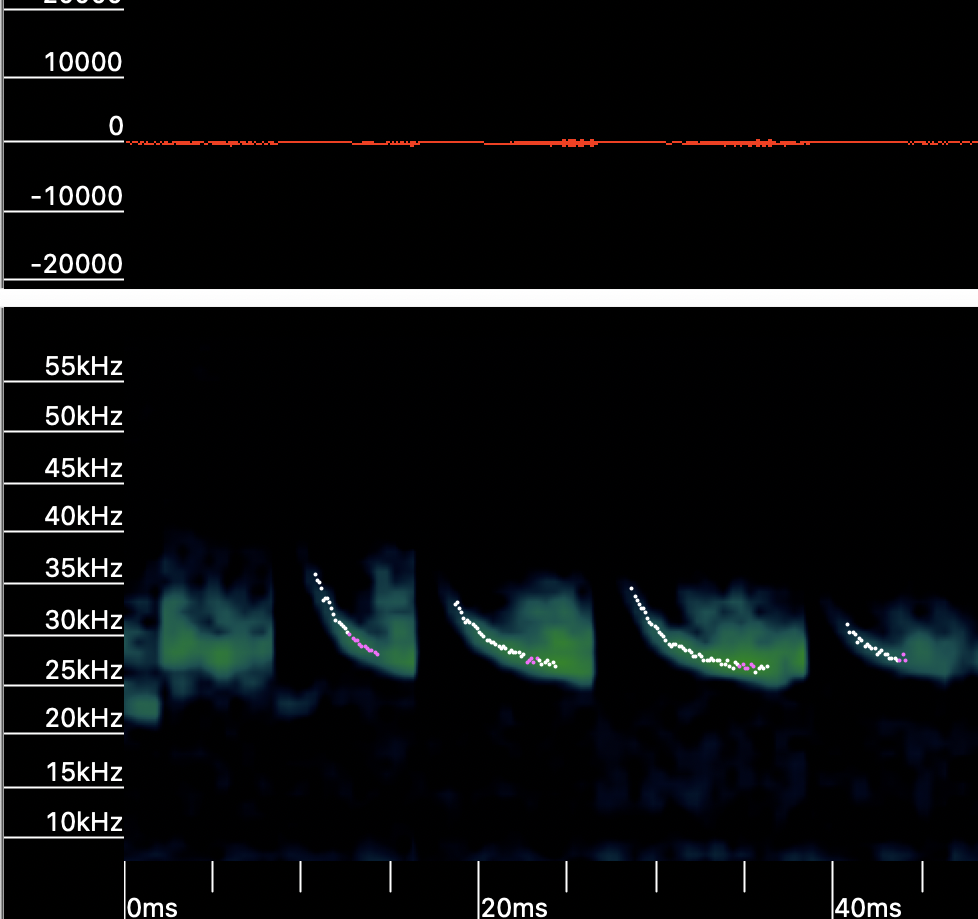
Sonogram of a bat recording
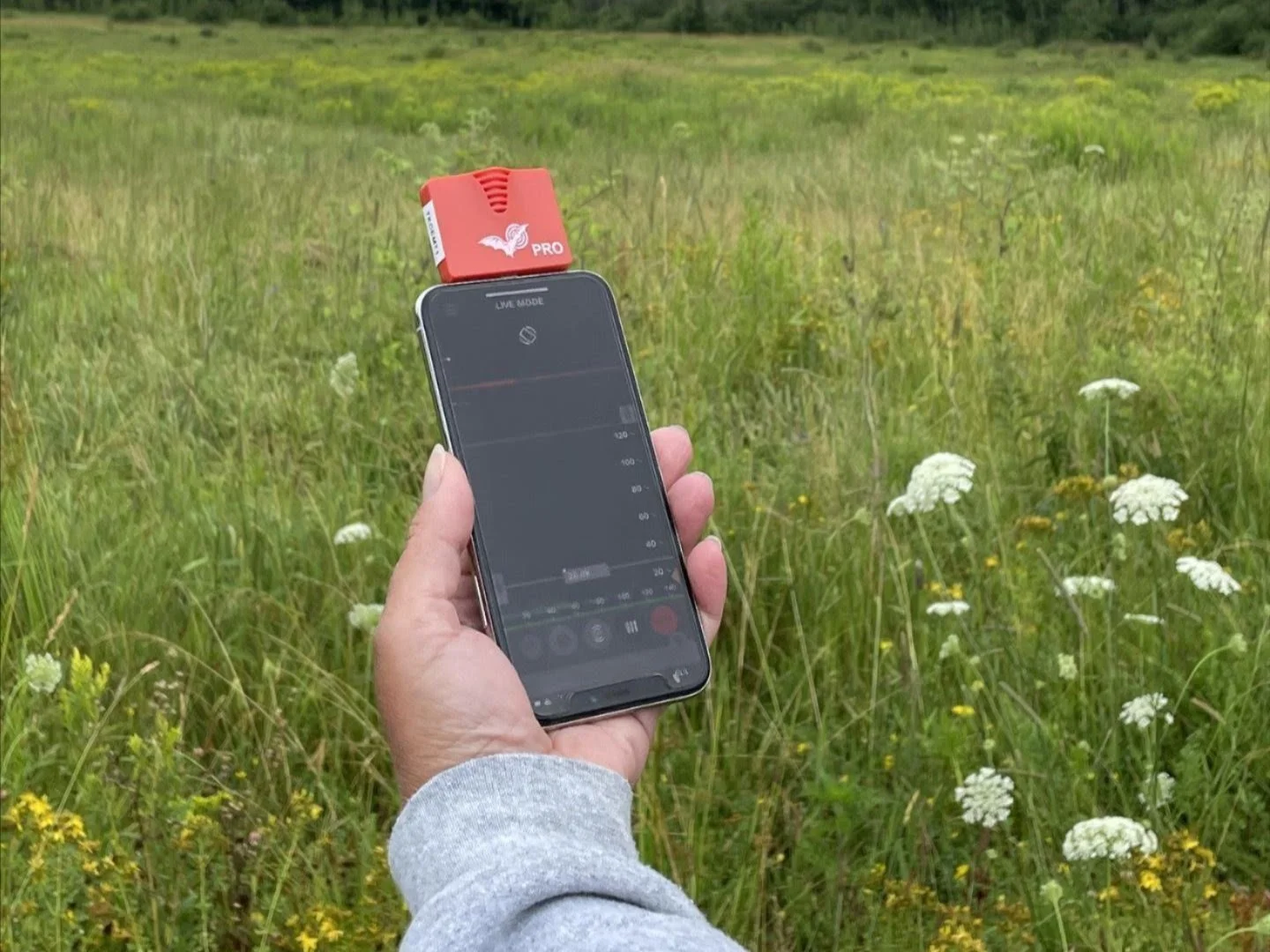
Echometer Touch Pro Bat Detector
Program Results
Since 2022, the Bat Monitoring and Education Program resulted in:
8 bat species documented
400,000+ individual bat recordings
8 bat-related education and outreach events conducted
18 bat houses installed
Coordinating a network of 16 regional partners to expand local bat monitoring and data collection capacity
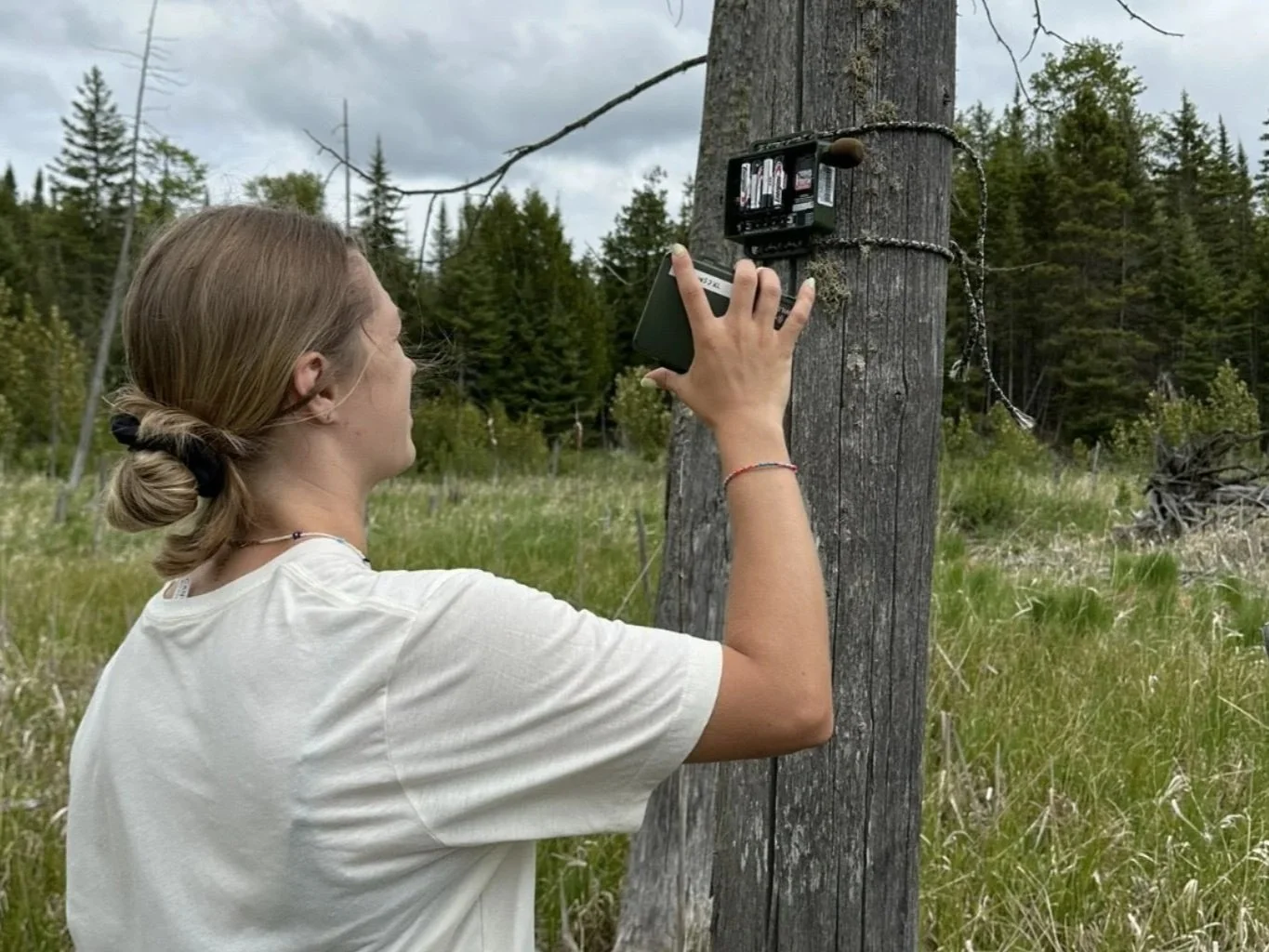
Bat Technician Amy Carlson checking a bat monitor in 2023
Get Involved
Here are a few ways you can get involved with our Bat Monitoring and Education Program:
For more information please contact Corinne at corinne@calt.ca or 705-782-2200.
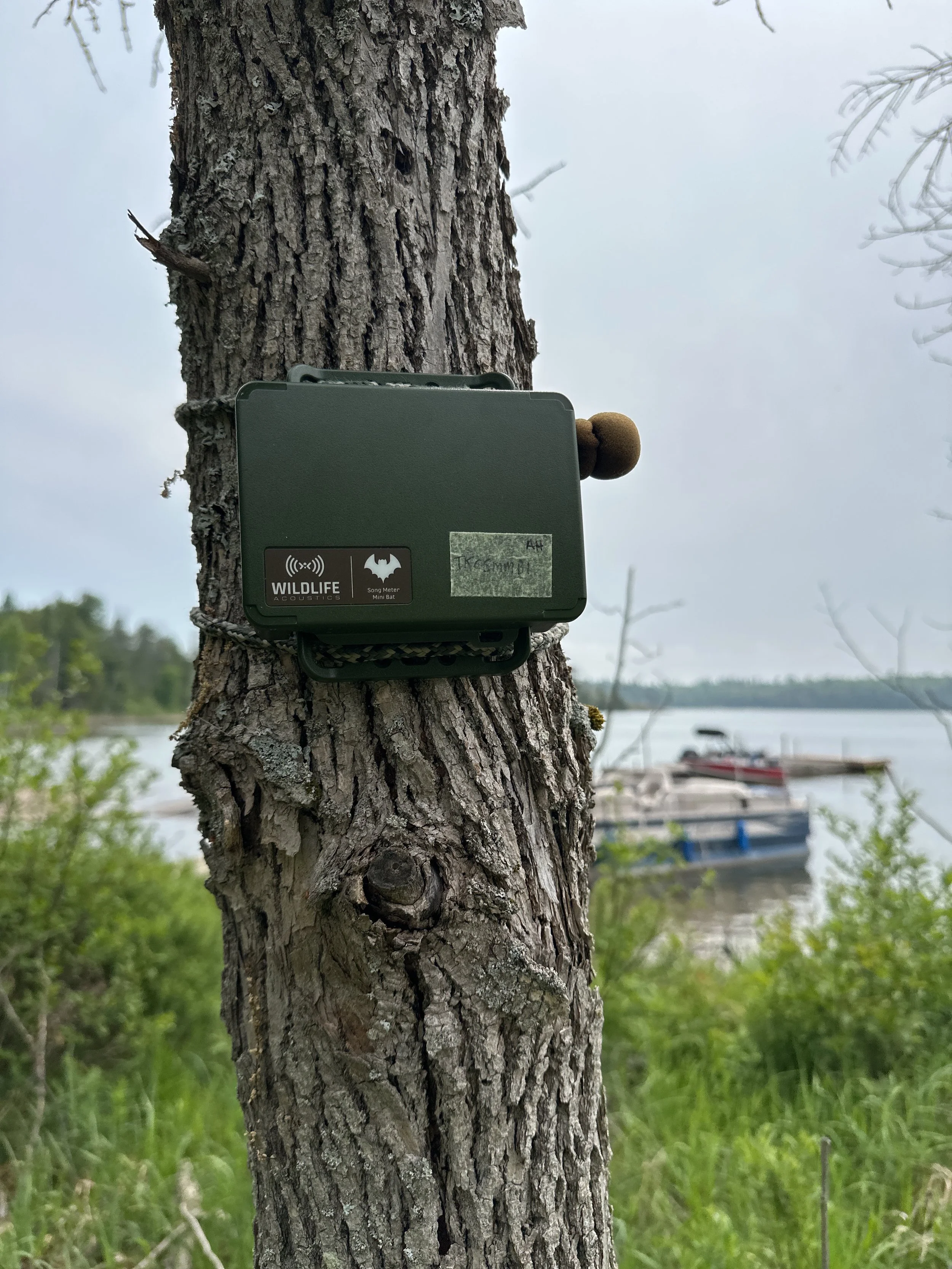
Song Meter Mini Bat Ultrasonic Acoustic Recorder
Program Supporters
Each automated bat detection device we use is a significant investment. Installing the devices each spring, changing batteries and memory cards every few weeks, taking them down in the fall, and organizing and analyzing the hundreds of thousands of recordings we collect requires a lot of time and effort. Since 2023, we have hired a Bat Monitoring Technician from early May through the end of August to manage the fieldwork and assist with data processing. Therefore, we are very grateful to our donors, whose general contributions provide the foundation for this work, and the organizations and businesses recognized here for directly supporting the Bat Monitoring and Education Program.









Undergraduate Thesis Using Bat Data
Our first Bat Monitoring Technician in 2023 was Amy Carlson, who was in the process of completing her undergraduate degree at Algoma University. She wrote her honours thesis using the acoustic data collected during her first summer with us. A special thanks goes to Dr. Pedro M. Antunes for his guidance and mentorship.
Algoma University student Amy Carlson