World Migratory Bird Day at Fort St. Joseph Recap
Written by Carter Dorscht, Executive Director
World Migratory Bird Day at Fort St. Joseph was another extremely successful day! 121 eager birders showed up on May 9th at Fort St. Joseph National Historic Site to experience the wonders of spring bird migration. This was the 4th annual partnership between Parks Canada and the Central Algoma Land Trust to host this event in celebration of World Migratory Bird Day.
The weather leading up to the day had been looking less than ideal all week, but it quickly improved. While the sun stayed hidden for most of the day, the rain held off save for a very brief, very light shower and the wind was very calm.
There were many exciting birds observed throughout the day, but the star was an immature male Orchard Oriole. Originally seen at about 7:15am in some cedar trees, it stuck around for well over an hour, allowing many to be able to see it.
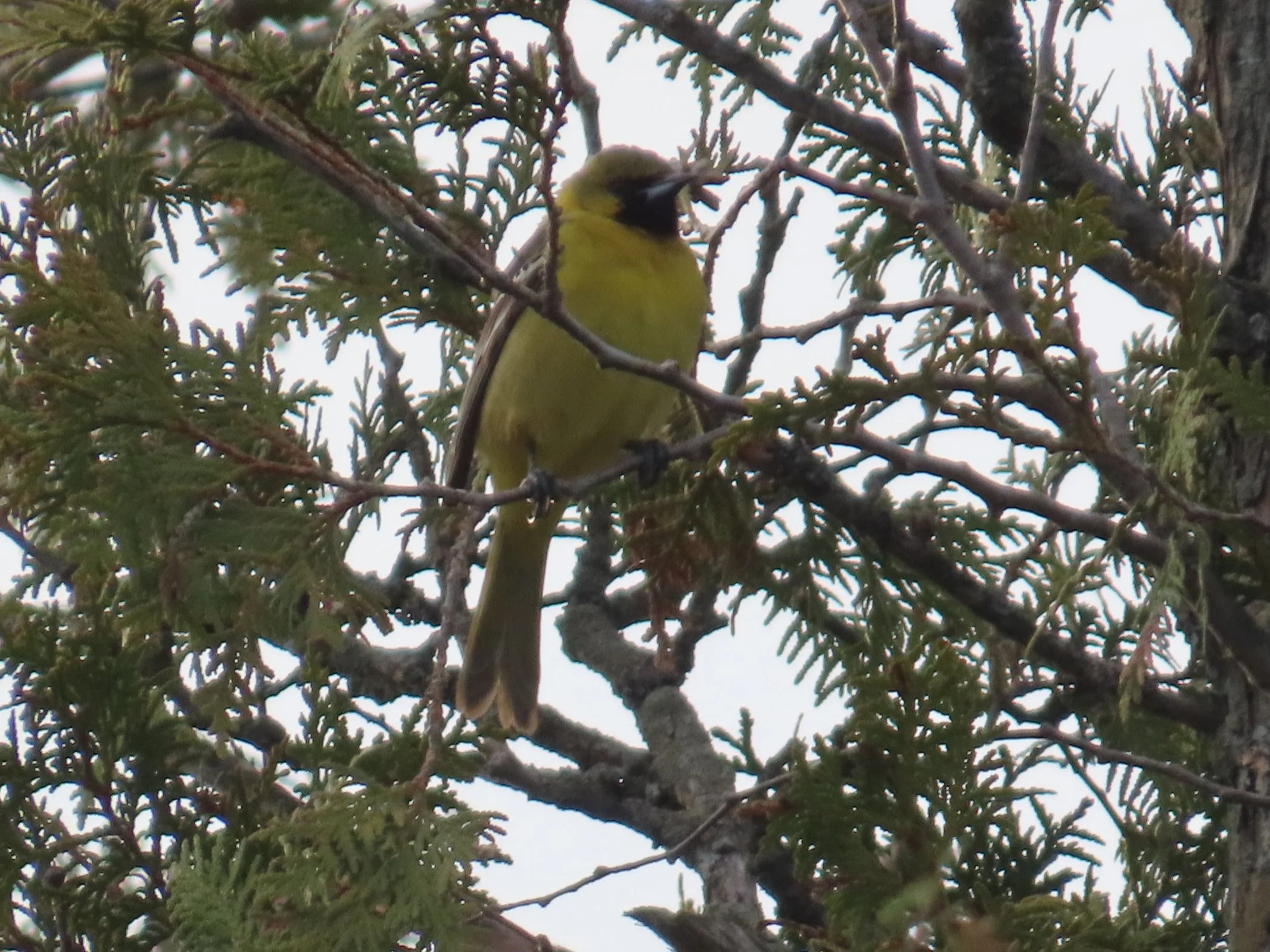
Orchard Oriole
This is the first time that an Orchard Oriole has ever been documented at Fort St. Joseph, making it the 224th bird species for the site’s list. Orchard Orioles are regularly found in much of southern Ontario, but are rare this far north. When they do show up locally, it’s this time of the year when they are migrating. Some individuals overshoot their intended destination but then likely head back south again once they’ve realized they’ve gone too far.
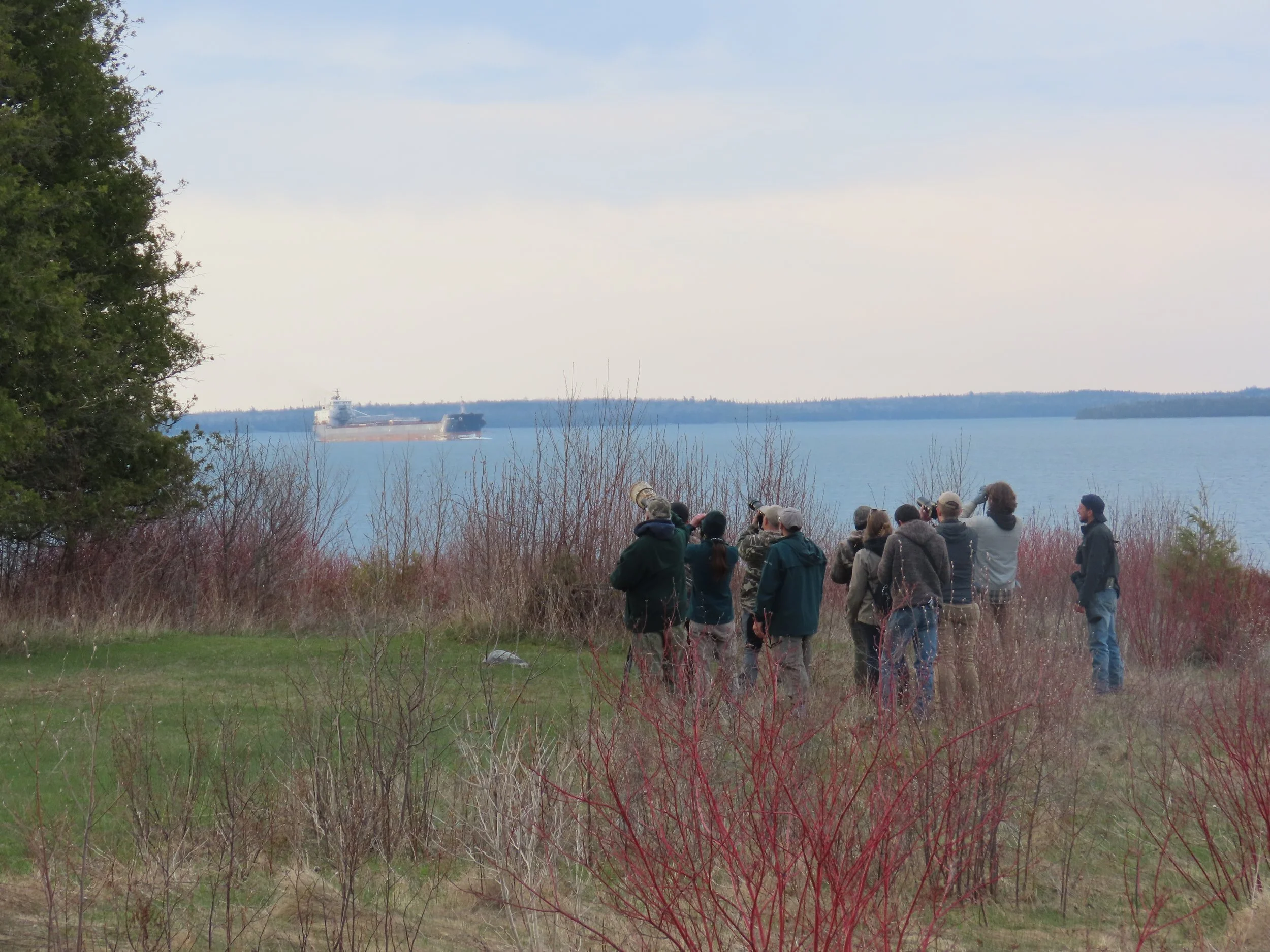
A group looking at the Orchard Oriole
The second rare bird of the day was a Blue-gray Gnatcher photographed on the Voyageur Trail just before 9:00am. This is another bird regularly found a bit further south and had never previously been documented at Fort St. Joseph, making it the site’s 225th bird species. Right after being photographed, it flew off and relocation efforts came up unsuccessful until almost an hour and a half later when it was very briefly observed again, this time in the visitor centre parking lot.
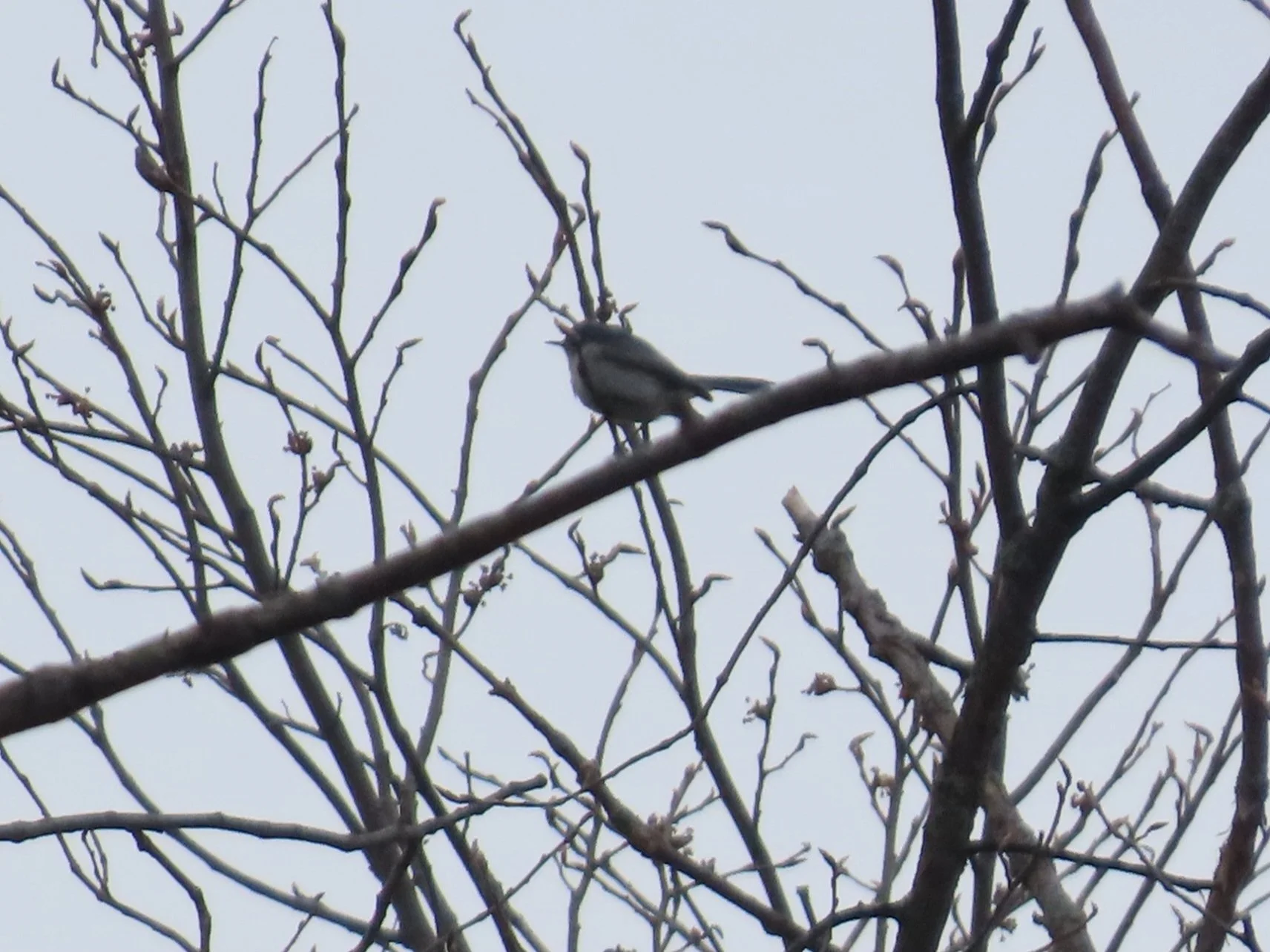
Blue-gray Gnatcatcher
In total, 117 different species of birds were observed. Other highlights included two Red-throated Loons, many Surf Scoters, White-winged Scoters, and Long-tailed Ducks, a late migrant Fox Sparrow, and colourful favourites like Rose-breasted Grosbeak and Baltimore Oriole. There was also a mass migration of warblers, with 18 different species seen and heard in total and likely thousands of individuals moving through throughout the day.
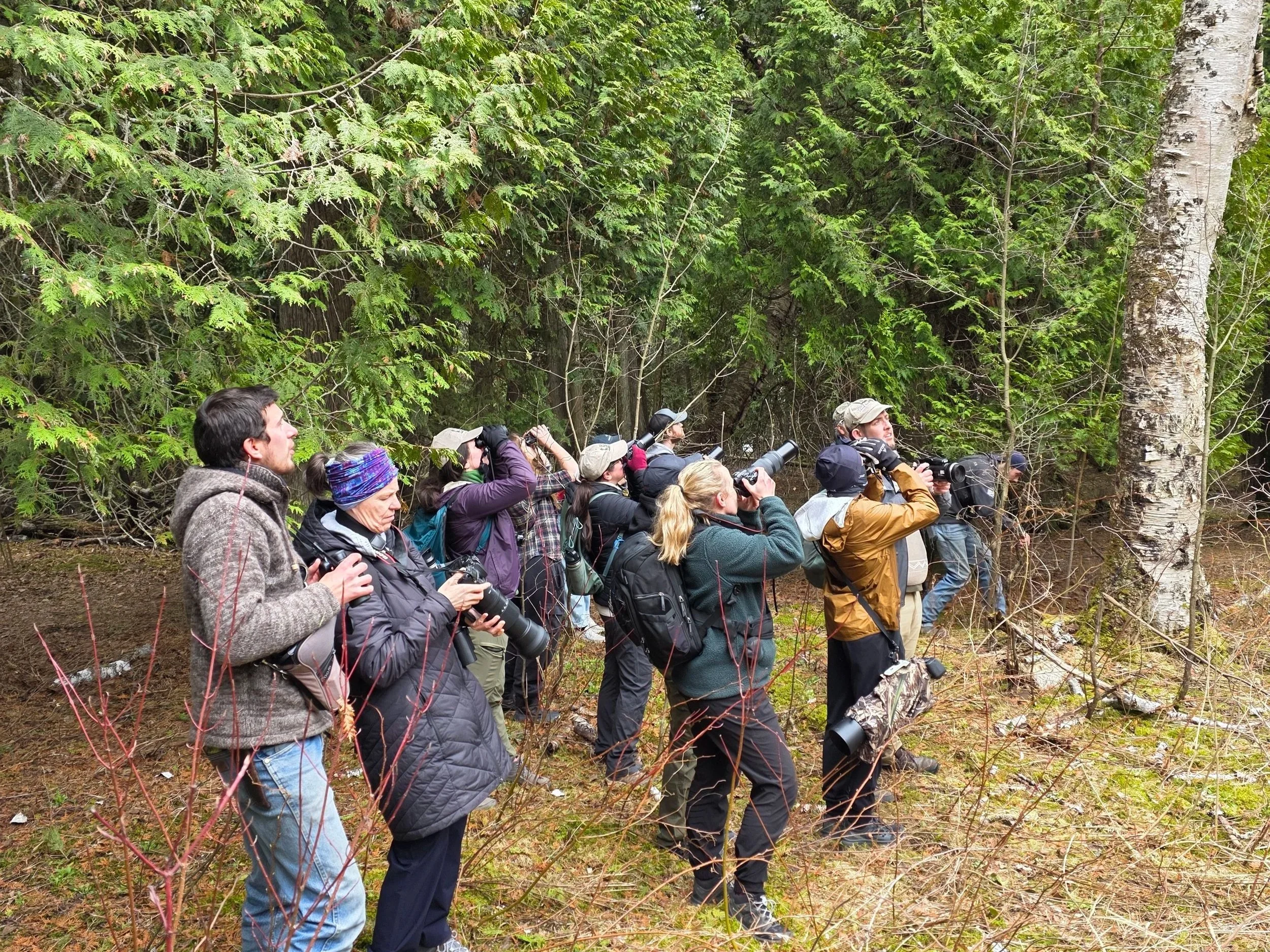
A group watching a migrating flock of warblers
Thank you to everyone at Parks Canada and the Central Algoma Land Trust for once again making World Migratory Bird Day happen and to everyone who came to participate. For those interested in visiting Fort St. Joseph National Historic Site this year, the site will be open for regular summer hours beginning on June 3rd.
The Central Algoma Land Trust depends on the generous support of our local community to carry out our work. Please consider making a donation to help advance conservation efforts across the Central Algoma region. Your contribution will help protect the natural spaces and wildlife that make this area so special.