Southern Flying Squirrels in Central Algoma?
Written by Carter Dorscht, Executive Director
Have you ever seen a flying squirrel? These critters are relatively common around here, but they are seldom seen because of their nocturnal nature. If you’re lucky, right at dusk you can see them “fly” from one tree to another. I find them absolutely fascinating to watch.
There are two species of flying squirrel in Ontario, the Northern Flying Squirrel and the Southern Flying Squirrel. Locally, Northern Flying Squirrels are the expected species. Here is a map of Northern Flying Squirrel observations on iNaturalist:
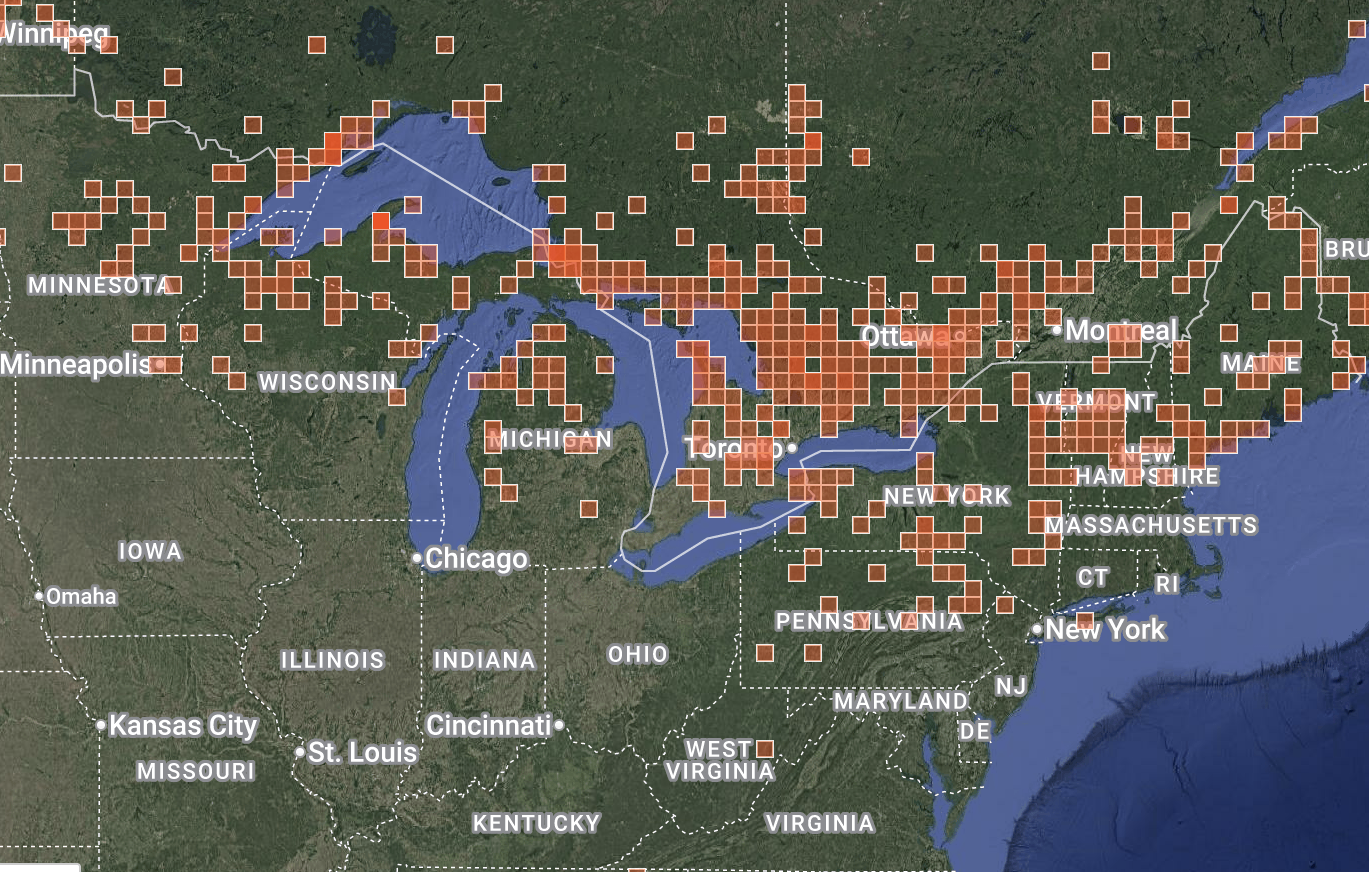
Click here to view interactive map.
And here is the map of observations for Southern Flying Squirrels:
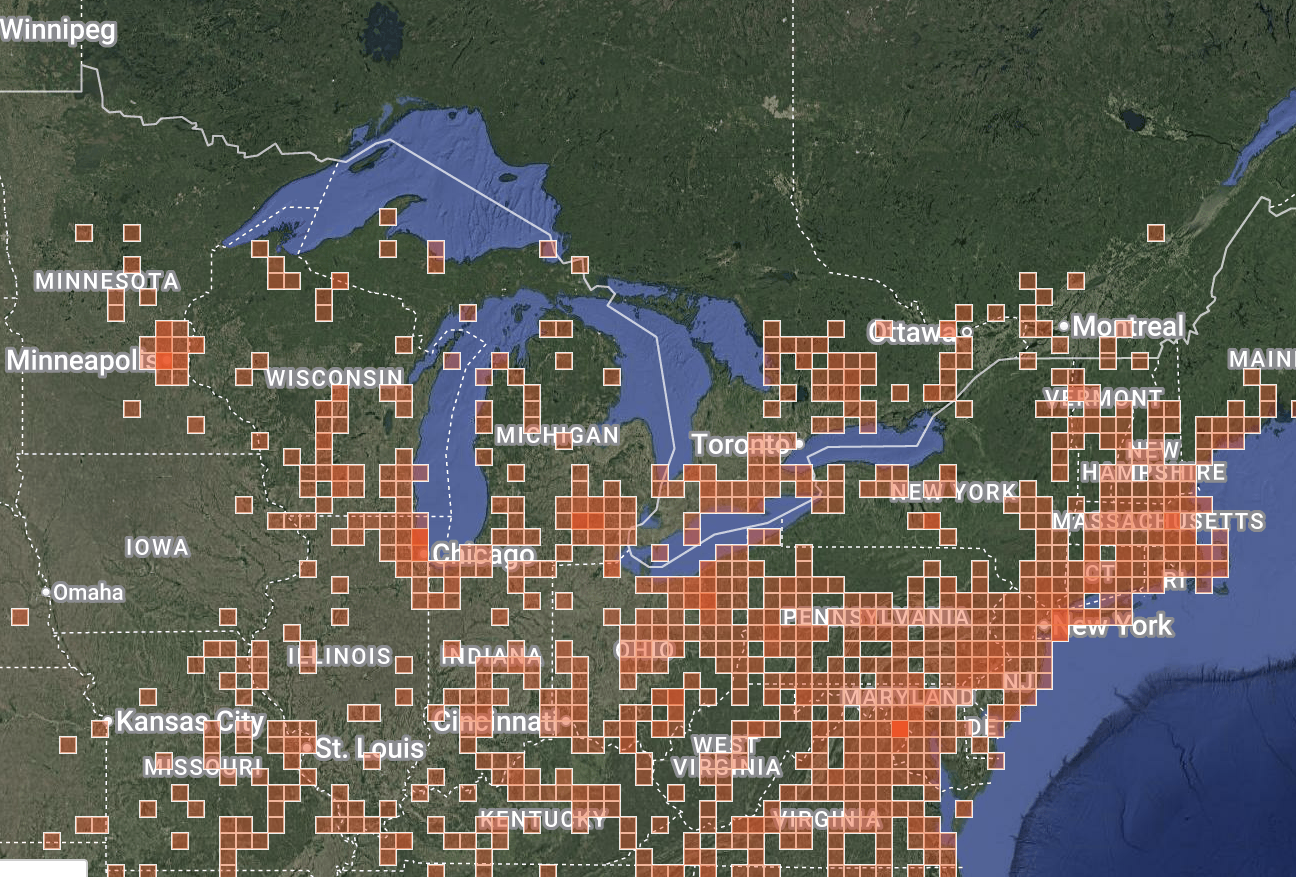
Click here to view interactive map.
As you’ve seen in the maps, there is definite overlap in range between the two species, but here in Central Algoma, we sit just a little north of where you might expect to find Southern Flying Squirrels.
However, recently some keen-eyed identifiers on iNaturalist noticed that my flying squirrel observations from my yard a few years ago, which I just initially assumed were Northern Flying Squirrels, were actually Southern Flying Squirrels!
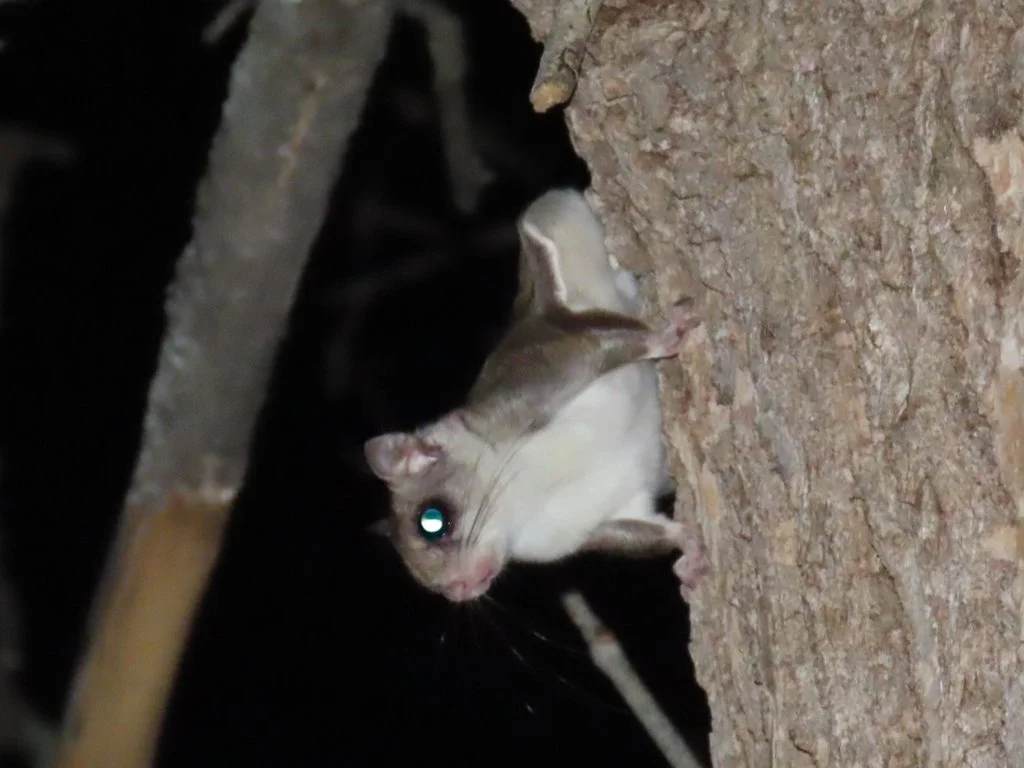
Southern Flying Squirrel at my house in Echo Bay on May 6, 2022
Now, what’s the difference between these two species?
Southern Flying Squirrels are a bit smaller and have white fur all the way to the roots on their underside, whereas the roots are grey on a Northern Flying Squirrel. Habitat can also be a clue, as Southern Flying Squirrels prefer deciduous forests and Northern Flying Squirrels prefer coniferous forests. The fact that they are nocturnal though makes identification even trickier than it already is too!
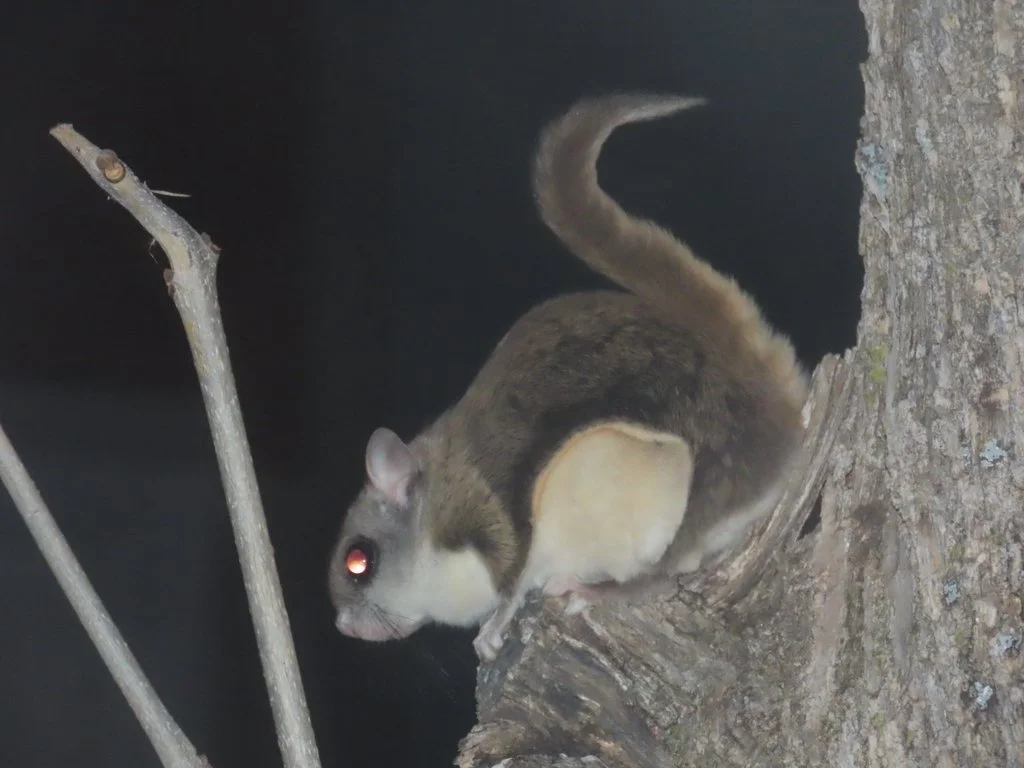
Southern Flying Squirrel at my house in Echo Bay on April 1, 2023
There’s also a record of Southern Flying Squirrel at Whitefish Point in Michigan, which is a more northern latitude than my house in Echo Bay. Apparently there are a handful of other records, although not on iNaturalist, in northeastern Ontario as well and studies have shown that they are expanding their range northward due to climate change.
A future project will have to be surveying for flying squirrels across our Central Algoma Land Trust’s protected areas. Like bats were before we started surveying for them, this is a taxonomic group that we lack data on due to their nocturnal nature. Once these surveys happen, it will be interesting to see if Southern Flying Squirrels are indeed more abundantly present than I would have initially thought.
So, while it might be difficult, if you see a flying squirrel, try to get the best and most photos possible and report your sighting! They will come into bird feeder stations at night, so setting up a trail camera pointing at your feeders could potentially be successful.
The Central Algoma Land Trust depends on the generous support of our local community to carry out our work. Please consider making a donation to help advance conservation efforts across the Central Algoma region. Your contribution will help protect the natural spaces and wildlife that make this area so special.