Turtle Nest Box Program
Turtles face many threats throughout their lives, particularly during nesting season when eggs are vulnerable to predators and habitat disturbance. With turtle populations already impacted by road mortality, habitat loss, and low reproductive success, protecting nests can help give more hatchlings a chance to survive. Through funding from Lake Huron North, we have begun building and installing protective nest covers to prevent predators from accessing turtle eggs while allowing natural incubation and hatching to take place.
About the Program
Turtles face numerous challenges throughout their lives, but their eggs are especially vulnerable to predation. Raccoons, foxes, skunks, and other wildlife frequently prey on turtle nests, contributing to the already low survival rate of young turtles. Combined with threats such as road mortality and habitat loss, these pressures make it difficult for turtle populations to remain stable.
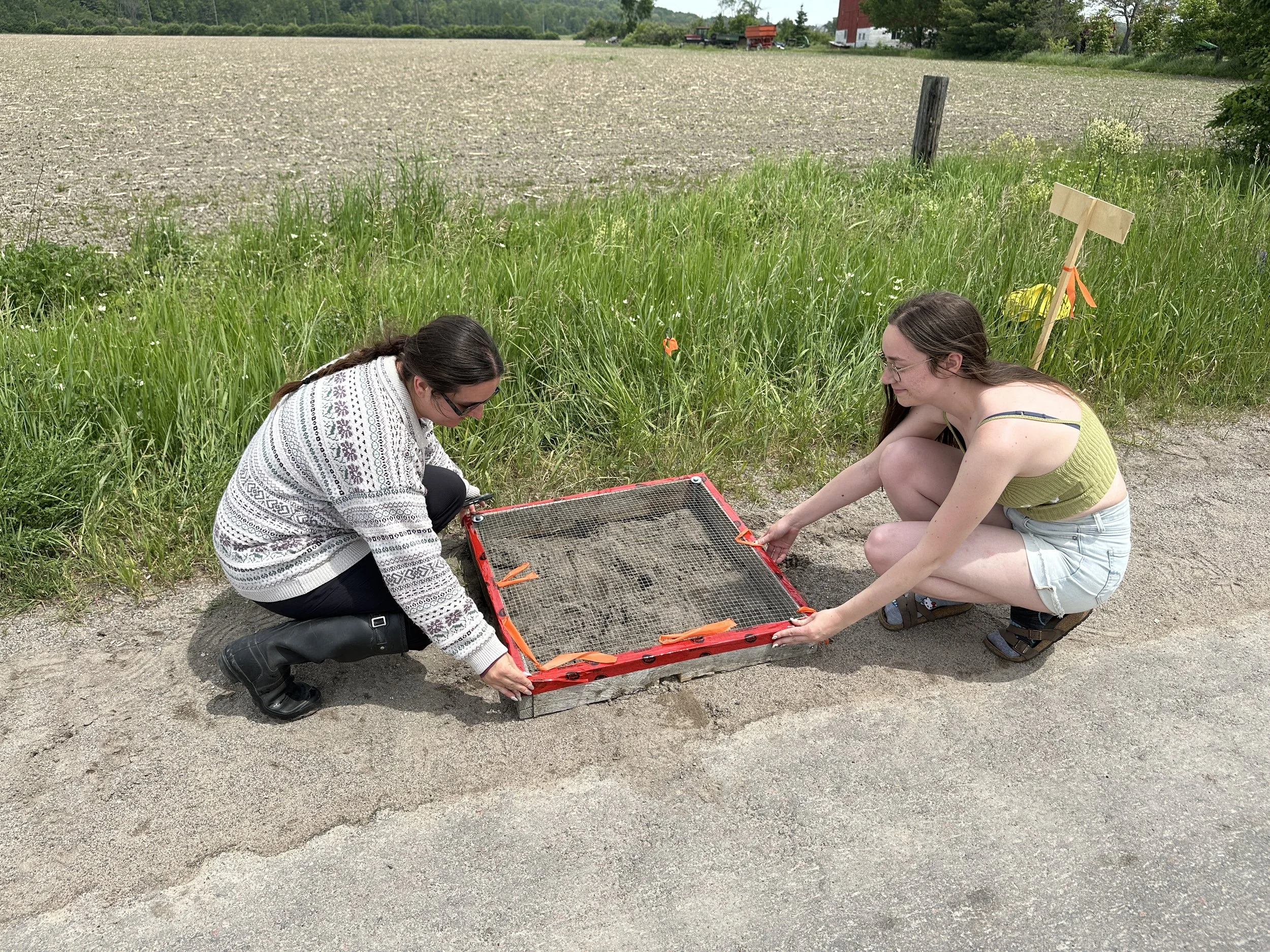
To help address this issue, the Central Algoma Land Trust has started building protective turtle nest covers, with funding provided by Lake Huron North. These covers are placed over vulnerable nests to prevent predators from digging up and eating the eggs while still allowing sunlight, moisture, and warmth to reach them. They are designed to remain in place without disturbing the natural development of the eggs and allow hatchlings to safely emerge.
By protecting turtle nests, we hope to improve hatchling survival and contribute to the long-term conservation of local turtle populations.
Spotted a Nesting Turtle? Let Us Know!
Have you spotted a turtle nesting, or suspect you may have found a turtle nest? We'd love to hear from you!
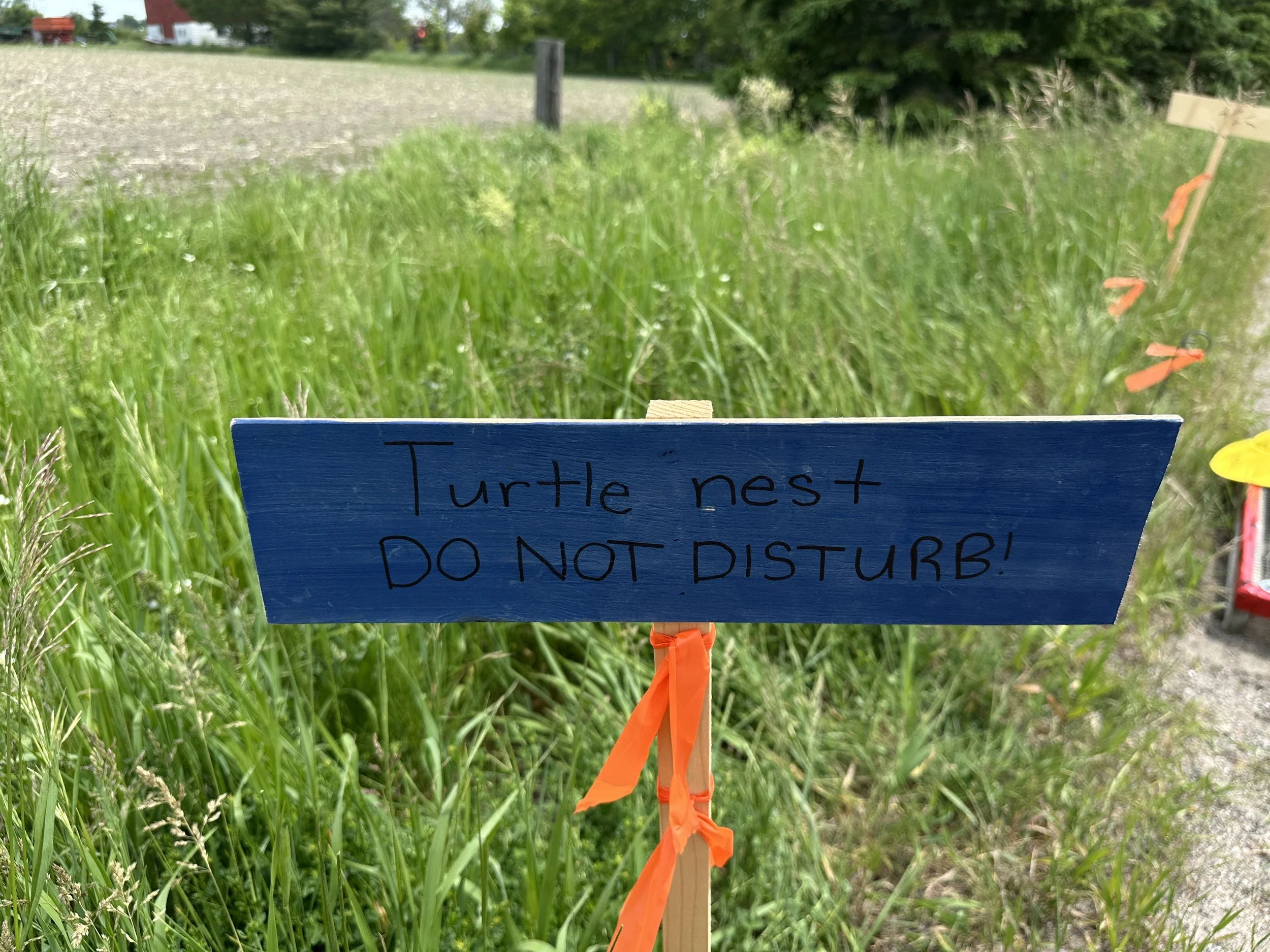
The Central Algoma Land Trust is asking community members to keep an eye out for nesting turtles and report any potential nest locations to us. If you spot a turtle laying eggs or suspect a nest may be present, please contact us. Our staff can visit the site, investigate, and determine whether a protective nest cover is needed.
Your observations could help protect vulnerable turtle eggs and give more hatchlings a chance to survive!
Please remember: Turtle nests and eggs are very sensitive to disturbance. Never touch, dig up, or attempt to cover a suspected nest yourself. Simply observe from a distance and let us know where you spotted it.
Turtle Nest Covers
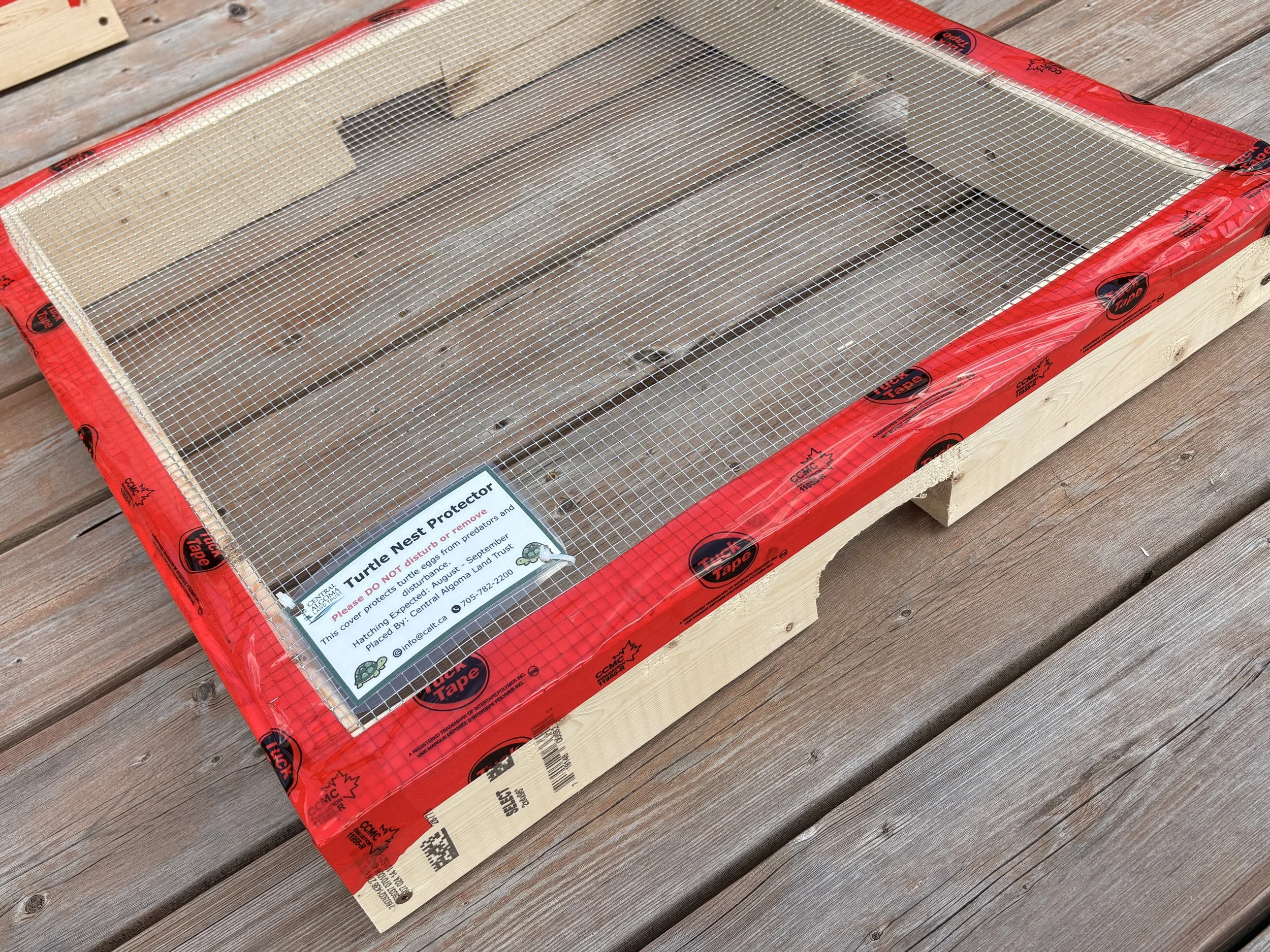
Turtle nest covers can come in a variety of designs, but they share a few key features since they all need to protect the eggs while still allowing natural development:
Strong, durable material: Usually wire mesh or metal is placed overtop so predators like raccoons and foxes can’t dig through or tear it apart.
Openings for sunlight and rain: The mesh design lets heat, light, and moisture reach the eggs, which are essential for proper development. It also allows for ventilation to prevent overheating or mold.
Anchored securely to the ground: Stakes or pegs hold the cover in place so animals can’t lift or push it aside.
Low profile: They sit close to the ground so they don’t attract too much attention from predators or disturb the nest.
Escape space for hatchlings: Small gaps or raised edges let baby turtles get out when they hatch, while still keeping larger predators out.
Turtles of Algoma
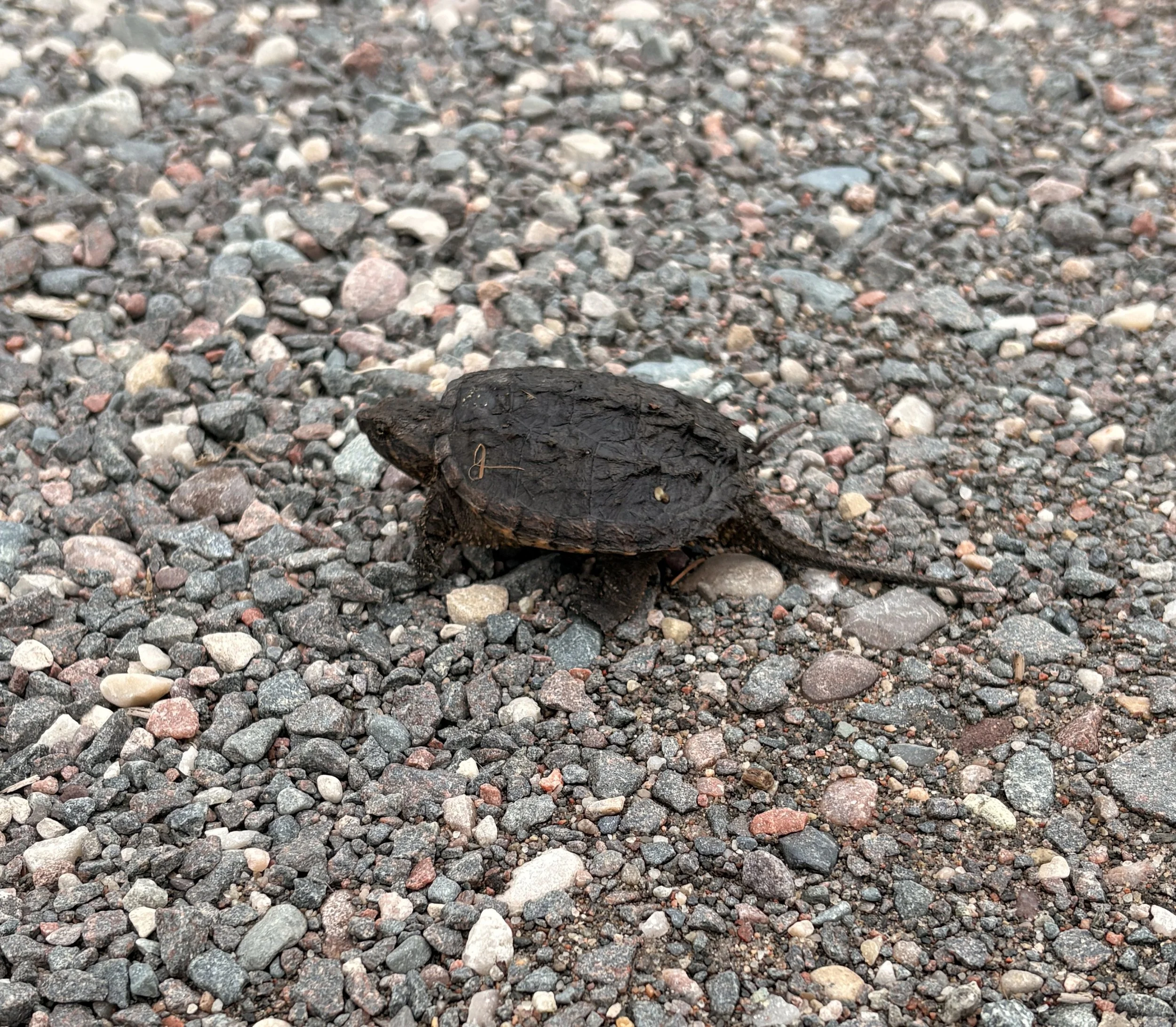
In Ontario, there are a total of eight species of turtles, all of which are considered species at risk. In Central Algoma, there are only four species whose ranges reach this far north, the Painted Turtle, the Common Snapping Turtle, the Blanding’s Turtle and the Wood Turtle.
All of Ontario’s turtles are semi-aquatic. You can find them on land or in the water during the months of April through to October. However, you are most likely to spot them during May and June as this is when they are breeding, and laying eggs. Both males and females will travel long distances to find a mate and a suitable nesting location. Exactly when and where the female lays eggs depends on species, location and the year. However, many of Ontario’s species do exhibit strong nesting site fidelity, meaning they will likely travel to the same location as previous years to lay eggs, often the exact same spot or within a few metres.
How to Get Involved
You can help us protect local turtle populations in more ways than one!
Report a Turtle Nest: Have you spotted a turtle nesting or suspect a nest may be present? Contact the Central Algoma Land Trust! Our staff can investigate the location and determine whether a protective nest cover is needed. Please observe from a distance and never disturb a suspected nest.
Donate Materials: We are always looking for materials to help build more turtle nest covers. If you have suitable materials to donate or would like to contribute to the project, we'd love to hear from you!
Every sighting and material donation helps us protect vulnerable turtle eggs and give more hatchlings a chance to survive.
Interested in helping? Contact us to get involved, email us at info@calt.ca or call 705-782-2200.
Community Partners
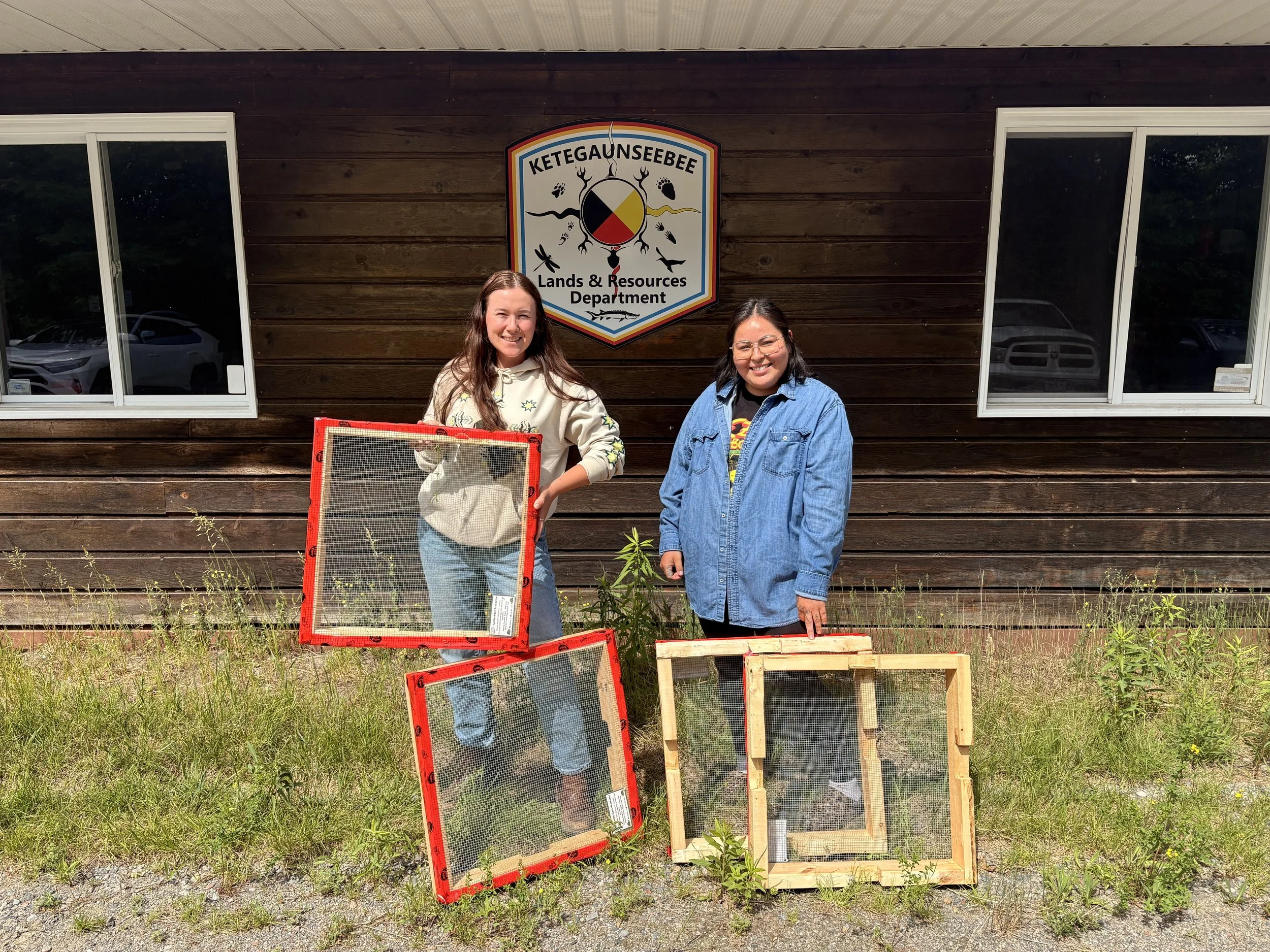
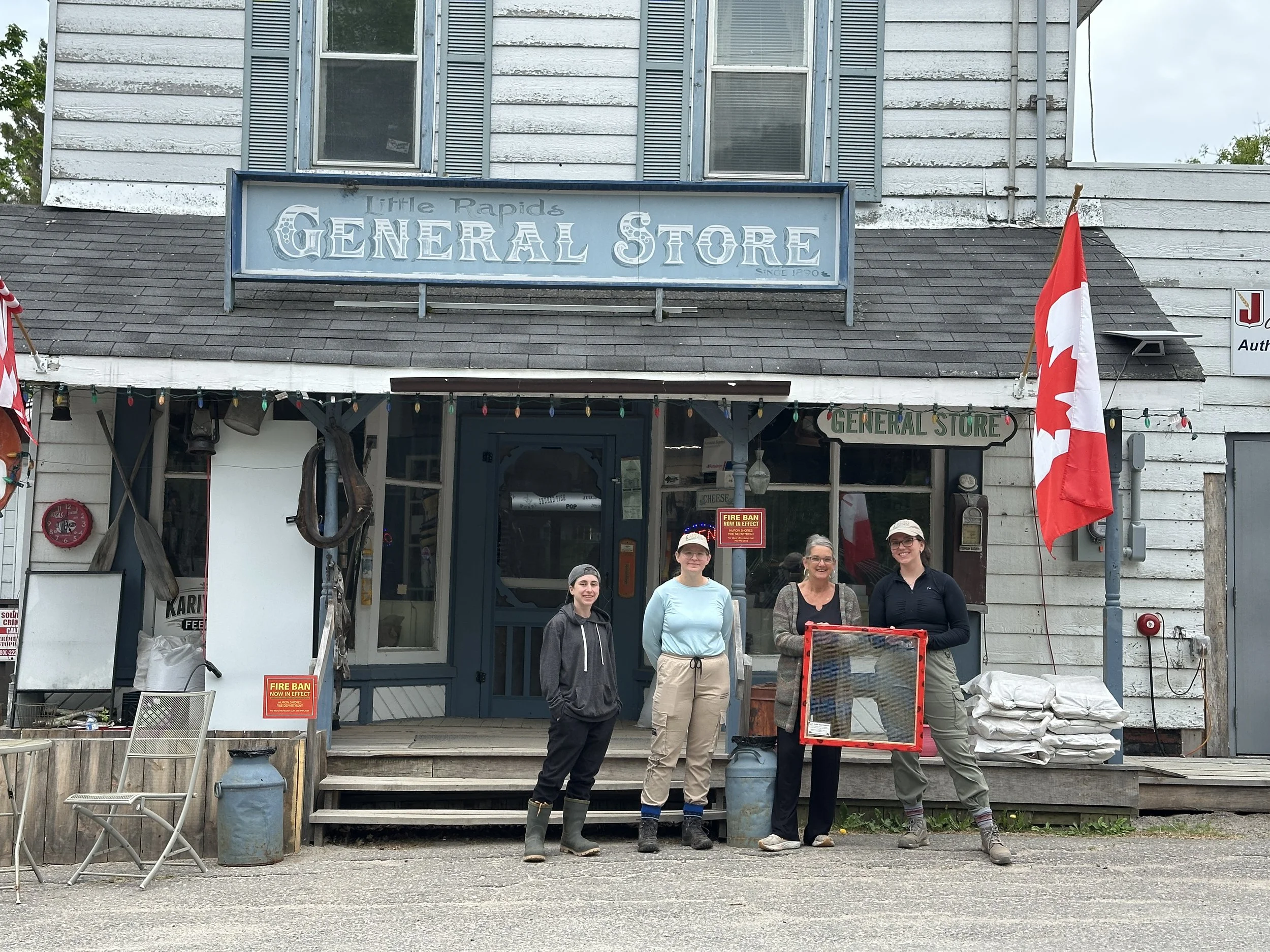
We would like to extend a heartfelt thank you to the Garden River First Nation Guardian Unit and Little Rapids General Store for partnering with us on this program! At the beginning of the season, both partners helped distribute covers to community members in their respective areas, allowing us to expand the program’s reach and extend our conservation efforts across the region, from Garden River to Thessalon. We are grateful for their support and commitment to local conservation!
Program Supporters
We are very grateful to our donors, whose general contributions provide the foundation for this program, and the organizations recognized here for directly supporting it.