
Our Responsibility to the Forest
Written by Johnna Lepore, Assistant Field Technician
Sharing space with opportunistic omnivores
As nature emerges from the snow covered ground, humans and wildlife find common solace in the great green spaces. The forests that bring us exploration, providing us with both physical and mental exertion also bring us closer to those that call these woods home. Bears take the winter off, but come spring they are scavenging, rearing their young or preparing for the breeding season which usually falls in the summer months, giving birth around January. These cubs stay with mom in their den over winter and can continue to travel together as yearlings. We have all heard the warnings of the protective nature of mama bears and their young, a fierce determination to ensure the safety of their own.
Although bears, like most wild animals, want nothing to do with humans, allowing us no more than momentary fragments into their daily lives and then vanishing into the woods when we are too noticeable, too loud or too close. However when there are young around, this aloof nature changes into a defensive one. As their behavior changes, it is good practice for humans to modify the way they interact with the forest to assure the safety of themselves and the bears.
I have spent my whole life exploring diverse local ecosystems, some vast, some within city limits, all of which came with potential for wildlife encounters. These experiences have cultivated my own internal safety guide, because like all humans, with experience comes comfort. And although that cultivates more exploration, it can also create complacency - especially in regards to personal safety. A recent experience of mine is a perfect example of how being prepared and knowledgeable are two very different aspects of exploring that work best together.
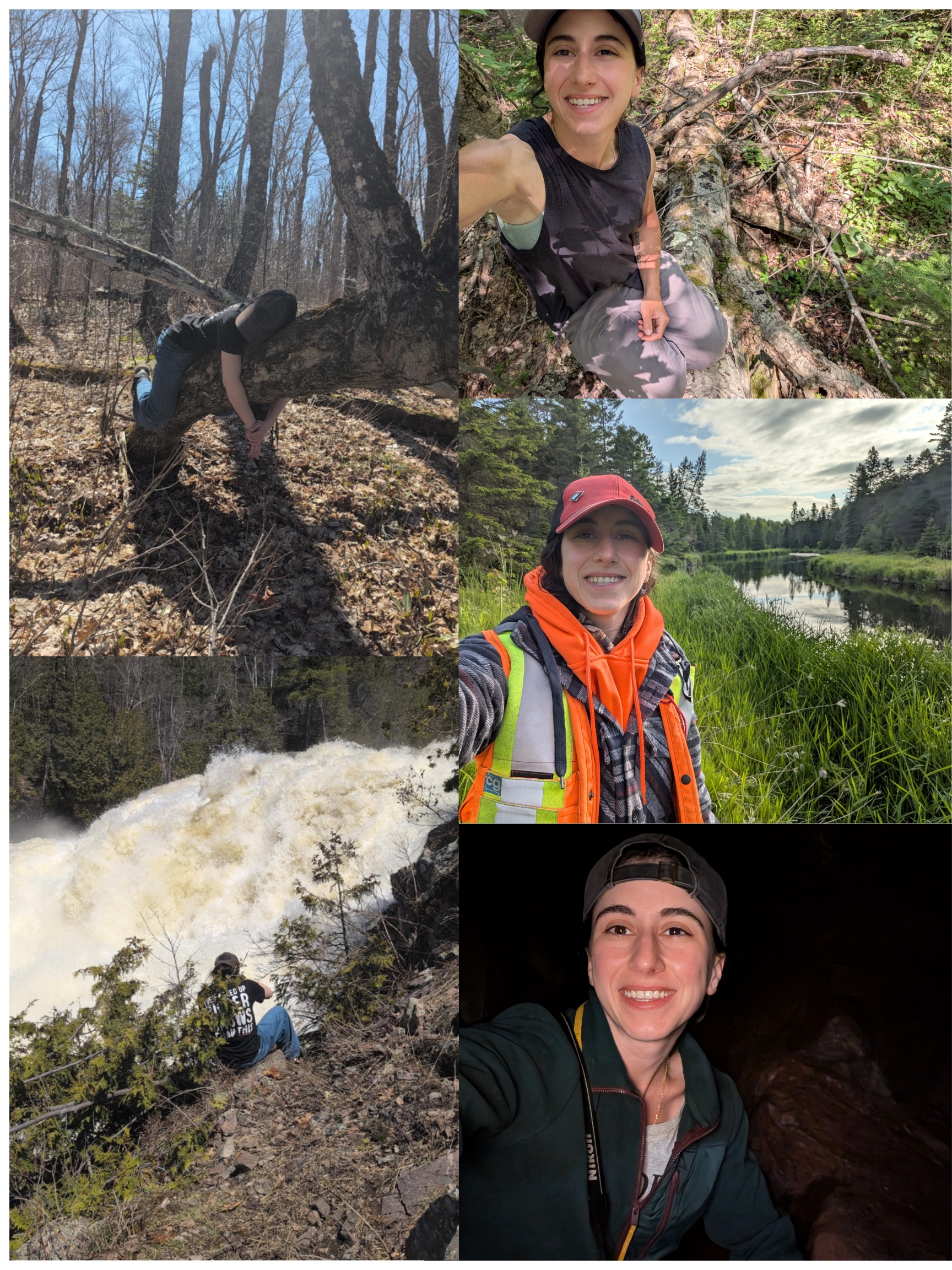
A photo resume of some of the wetlands, forests, caves and any other places I can manage to get to.
A story of my bear encounter
One of my favorite jobs here at Central Algoma Land Trust is trail blazing. I love putting myself into the mind of a hiker noting what direction I would assume the easiest depending on the natural infrastructure, granted the deer’s do most of the work as I use their trails often. Why recreate the wheel when you can follow the deer. As I worked through the trail, I worked in silence, just taking in the songs of the beautiful birds, bugs and creaking trees that create my favourite orchestra. Eventually I came across one of the many large areas that are smooth rock covered in different moss, lichen and flowers willing to grow in the cracks. These are beautiful areas but all I saw was a limited tick zone to take a break on and sit in silence.
I placed my tools down, found a comfy spot and started scrolling through my phone it was not long before I heard a large snapping of a branch very close by. My initial thought was a bird. Those guys can really make some insane noise, however my intuition quickly moved onto unease with my hair standing on end and my breathing becoming something I needed to control. I slowly stood up from my seated position and peered into the forest where I had heard the cracking. Unfortunately for my 5ft stature, I could not see that far over a juniper bush a few feet in front of me. That was until large, fluffy black ears appeared from behind that exact bush.
Seeing the situation I was in, all I could do was evaluate my surroundings. I looked for cubs, just hoping if they were there they were not behind me. Thankfully, a second bear appeared shortly after spotting the first. This bear was smaller, most likely a yearling following closely behind mom. Secondly, I noticed that they did not seem to be aware of my existence yet. I could smell their intense musk, meaning the wind was heading towards me. As I was sitting in silence I was not giving these beautiful animals any warning of my presence in their home. I looked at my tools that are now closer to the bears than myself and decided I could come back to retrieve those at a later time.
Due to my close proximity, I chose to slowly back away to create some distance, however, just like the bear, I broke a twig announcing myself officially. Both very large heads snapped in my direction with their eyes now locked on me. Before I could take a breath, mom falsely charged, a visceral warning I had no intention of challenging. I held my position for a moment avoiding direct eye contact, when she did not advance I began slowly backing up again. Once I hit the forested area, I heard both bears sprinting into the forest away from me. I began my journey back to the conservation centre, making purposeful noise, walking at a consistent pace, and making sure to take moments to observe my surroundings. Once I made it out of the forest I spotted mom strolling on the other side of the clearing far away from me and the conservation centre, her and her cub spent the day lingering around giving me the opportunity to admire their natural beauty and playful behaviours from a safe distance. This also gave me the opportunity to evaluate how I navigated the situation and truly appreciate how much soul I witnessed in the short interaction.
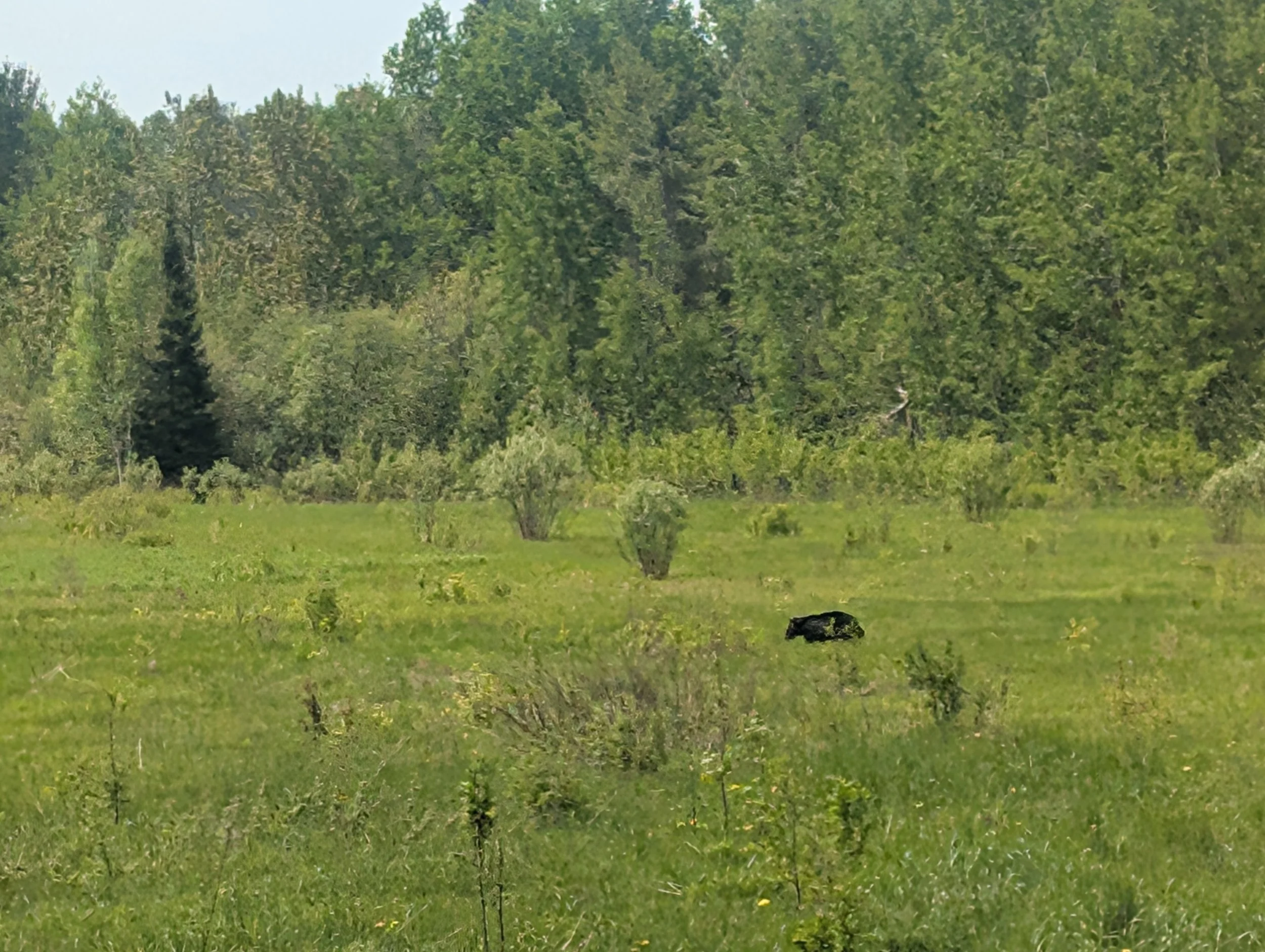
Black bear (Ursus americanus) at Boyer Preserve, infamous bear from the story.
There is always room for improvement
Now this story ends with no harm done, those beautiful creatures clearly wanted nothing to do with me. This experience was a critical reminder to myself of the responsibility I have to the forest. To always show up prepared, because, if something were to happen, the punishment does not always end with me. Being prepared requires a mix of equipment, knowledge and respect for nature, all of which are vital when exploring the unpredictable wilderness.
A reminder that we cannot predict nature, when we are in the homes of many species it pays to be educated on how to safely navigate the complex diversity of each area. Having bear spray accessible, if a bear is showing signs of aggression as it is a great tool to use when under distress. In those moments, be aware of wind direction as you want to be upwind from where you are spraying to avoid harming yourself. Having objects to make loud noises, my whistle is attached to my bear spray keeping it all together for easy availability. However a water bottle you don't mind hitting with a stick or even playing music as you explore will allow nature to know you are there to avoid any surprises.
Navigating through fear
Now you have a plan to be prepared, but what do you do when you encounter a bear. Ideally the bear will already be aware of you to limit any defensive reactions like in my situation but if they do not seem to know you are there the steps are the same. With bear spray in hand scan your surroundings try and decipher if the bear is alone or with cubs, check behind you to assure you are not between them and then slowly and cautiously walk backwards away from the interaction. Keep an eye on their reaction to your movement as well as the ground to avoid tripping or falling over to avoid startling the bear, they do not understand humans are just clumsy. If the bear does not move away from you at this point, make yourself big by raising your arms above your head and speak clear and loud, staying calm and assured. Ideally scaring the bear away from you, the goal in these situations is to leave the area and get somewhere safe, inside a building or vehicle if possible.
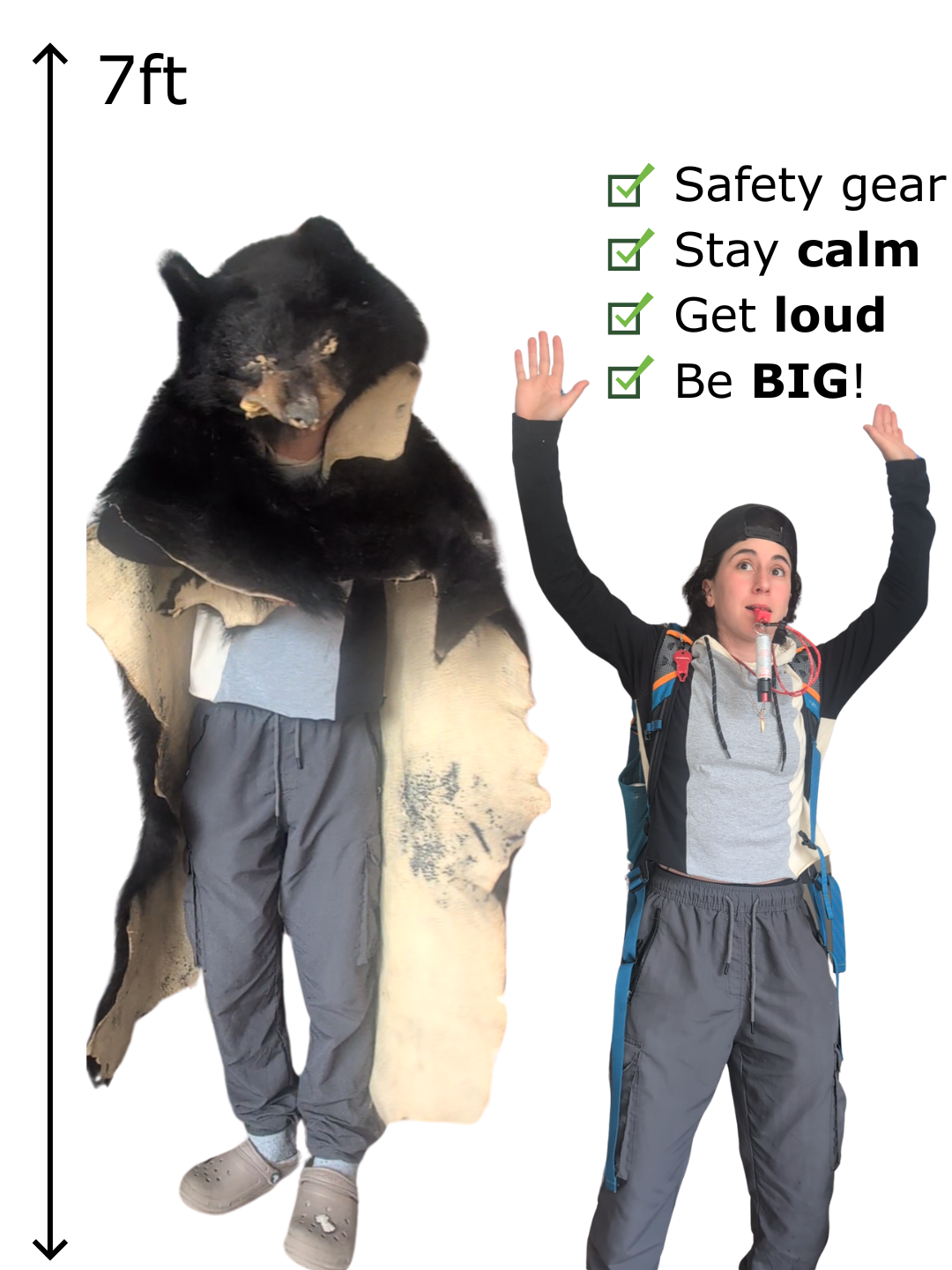
Bear safe demonstration
Bears contribution to ecological functionality
Black bears can be a threat to personal safety, as adaptive opportunistic predators, versatile climbers, these animals are both incredibly strong and dexterous capable of using their paws to open human designed objects including containers and latches. These intelligent animals have gained the title “ecological architects” due to their crucial role in the ecosystem as seed dispersers. Creating a pattern while foraging, shaping the distribution of plant life while contributing to a healthy soil and the nitrogen cycle through acts of scavenging, allowing for the movement of nutrients around their trails. Their influence keeps areas diverse and resilient, contributing to a well balanced ecosystem.
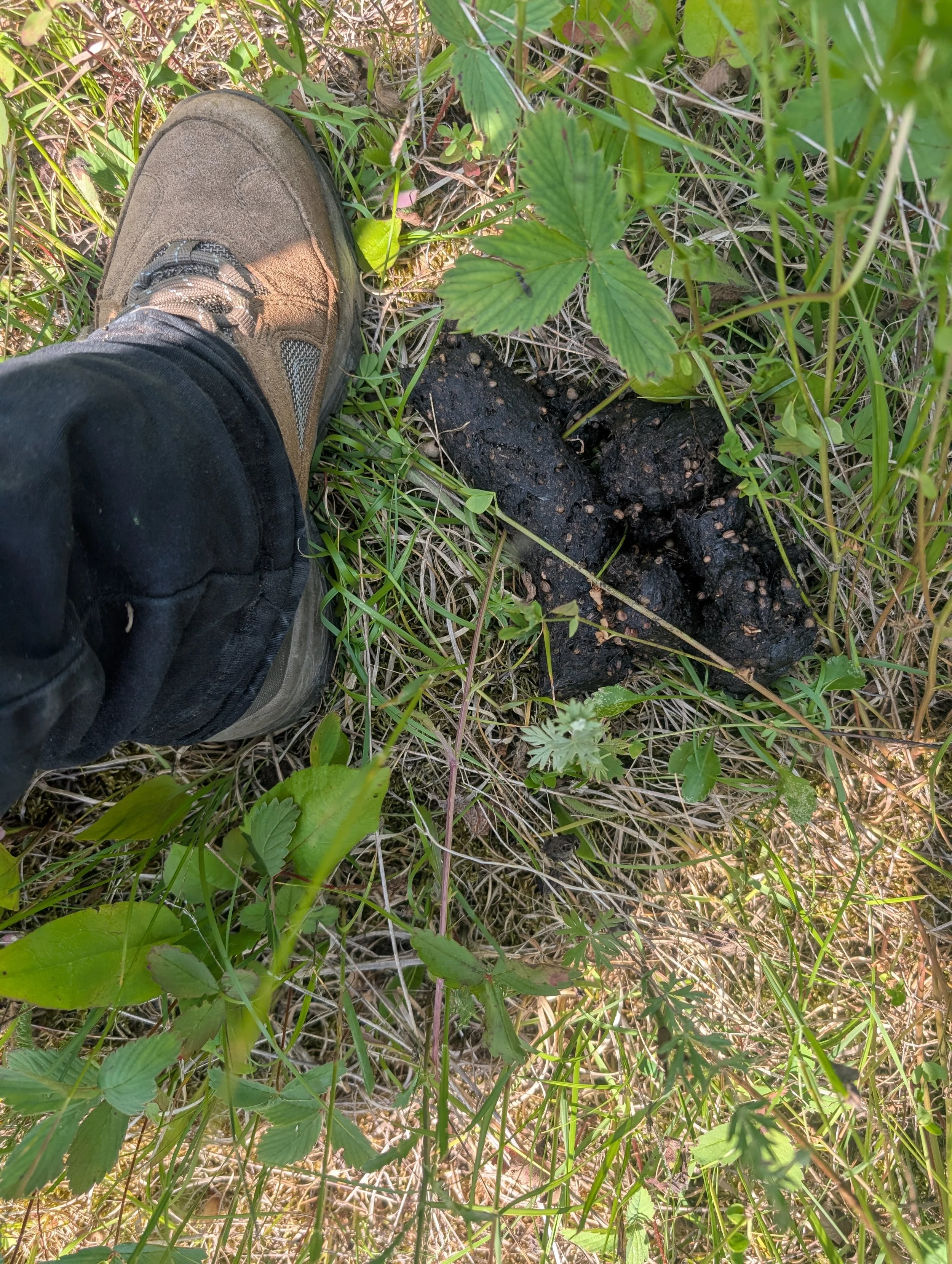
Bear scat found at Boyer Preserve
Cultural Significance
Black bears also hold a powerful cultural significance, as one of the seven Grandfather Teachings, the Anishinaabe teach that they live with a solid and strong heart holding the strength to face great fears and challenges to protect their young, a true testament to bravery. Many cultures regard the bear as guardians of the forest possessing qualities of strength and wisdom. They are also considered a symbol of healing and transformation through hibernation.
Battling human-bear conflicts with positive efforts
Ontario is home to the second largest black bear population in North America but the threats they face are increasing, a few being habitat loss caused by fragmentation as development expands. Vehicle collisions are a common threat as well as more direct human-bear conflicts. Lastly, climate change is a threat to the stability of available food, and forces change in natural patterns including hibernation. Emphasizing the efforts to protect nature's architects must include the protection of their habitats which range much farther than just their dens. Incorporating wildlife corridors to allow for a safer migration, management of hunting practices and the purpose of this blog post public education. To learn about something teaches care, and the practice of deep observation promotes unwavering stewardship amplifying the need for both preparedness and knowledge to work harmoniously for not just our safety but for shared spaces that provide us all with the essentials of survival.
The Central Algoma Land Trust depends on the generous support of our local community to carry out our work. Please consider making a donation to help advance conservation efforts across the Central Algoma region. Your contribution will help protect the natural spaces and wildlife that make this area so special.
