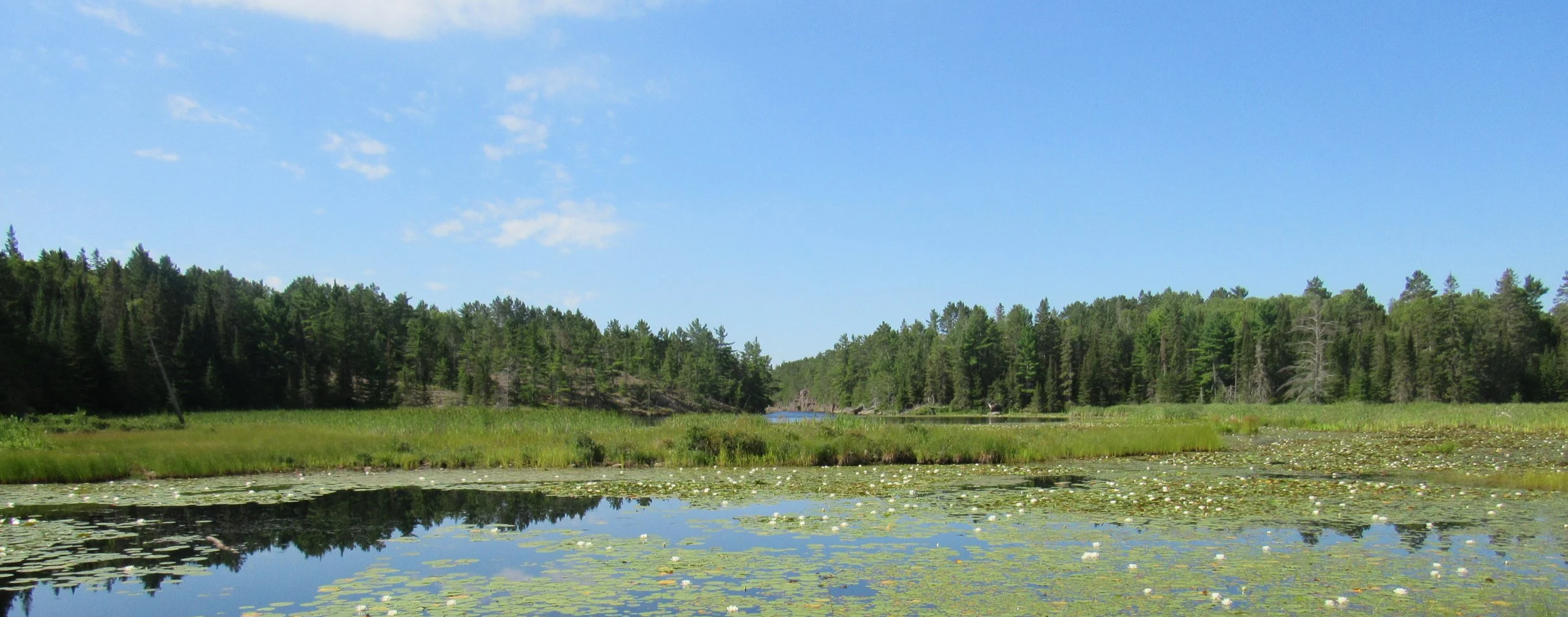
Bluebird Box Monitoring Program
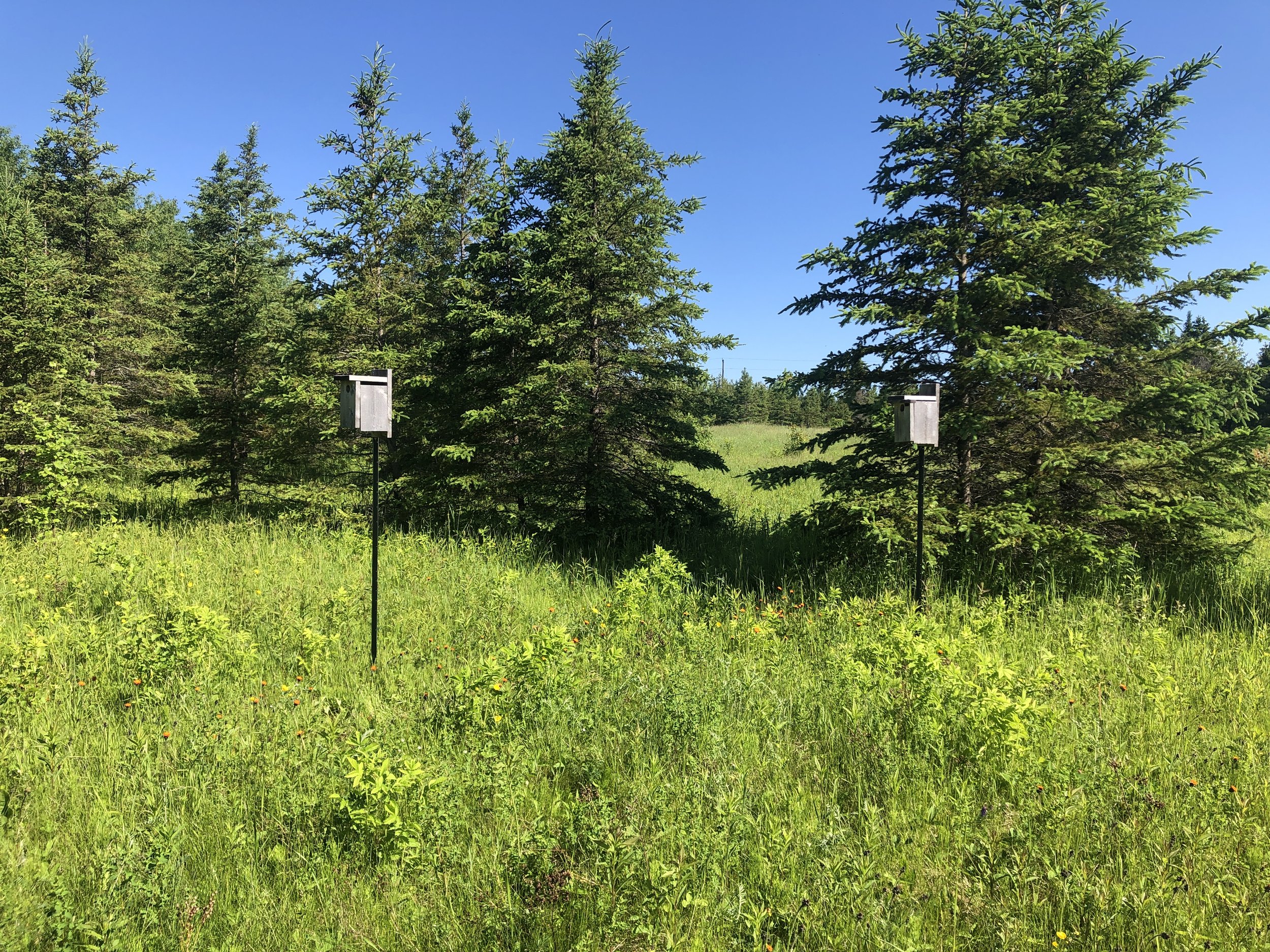
This program, made possible thanks to a partnership with Algoma University, provides Eastern Bluebirds and other bird species with nesting sites that are otherwise difficult to find. Since 2019, we have monitored more than fifty bluebird nest boxes each year during the spring and summer. Staff and volunteers regularly check each box to identify the species using it, count the number of eggs, and track the number of fledglings that successfully leave the nest.
About the Program
Our Bluebird Box Monitoring Program began in 2019 in partnership with Algoma University. At that time, a system of bluebird boxes was established with 50 nest boxes spread across four of our nature preserves and on select private properties. Since then, a few additional boxes have been added, bringing the total to 55 nest boxes. These boxes provide secure cavity nesting sites for our target species, Eastern Bluebirds, as well as other species such as Tree Swallows, House Wrens, and Black-capped Chickadees.
Eastern Bluebirds
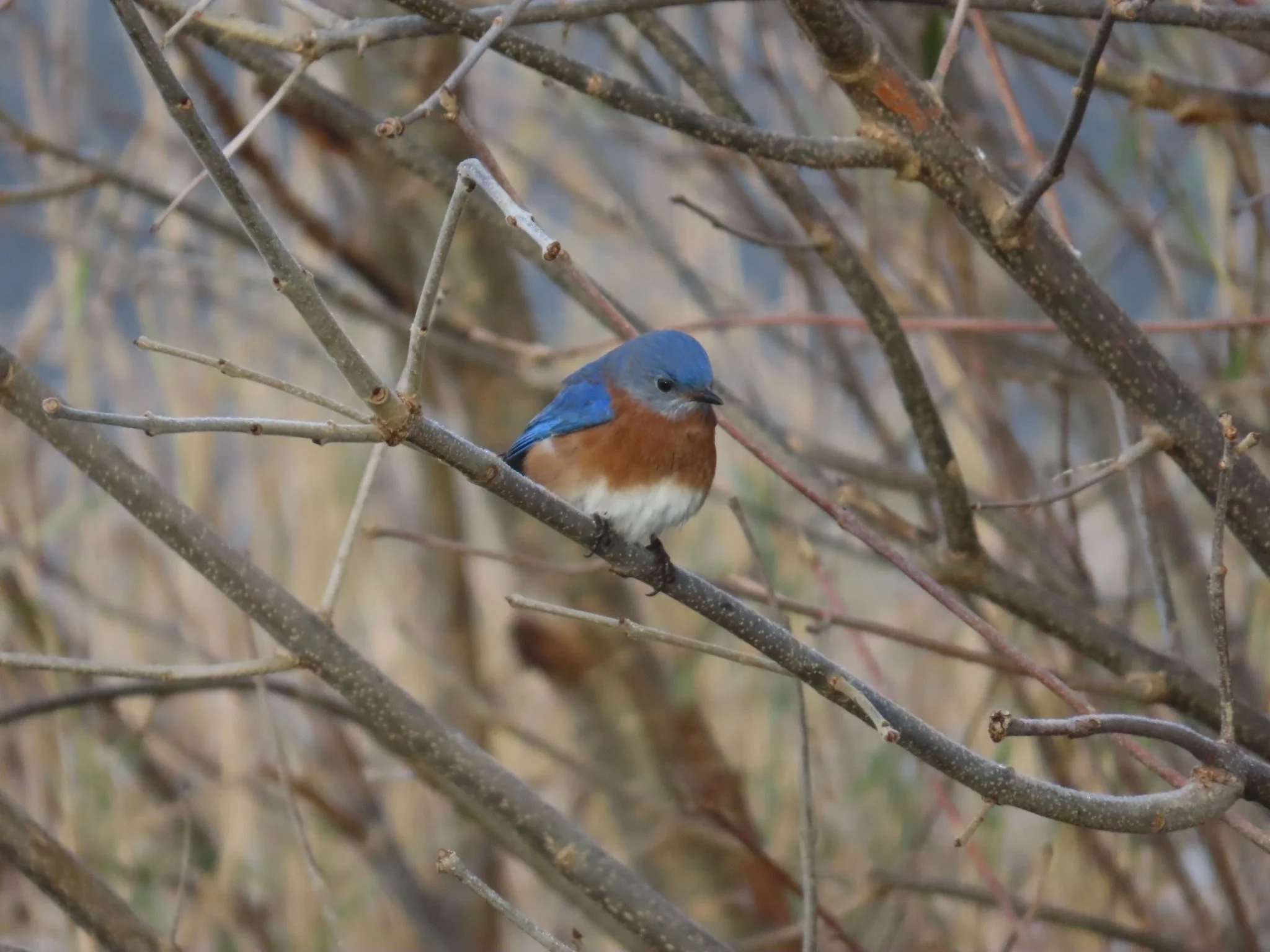
Until recently, Eastern Bluebirds were in decline. Primarily due to habitat loss and competition for nesting sites from invasive species such as House Sparrows and European Starlings, it was once uncommon to see them at all. In response, conservationists began installing bluebird boxes in an attempt to reverse this decline. These boxes mimic the natural tree cavities bluebirds use for nesting and are strategically placed in areas where they are most likely to use them.
Today, Eastern Bluebird populations have rebounded and are now considered not at risk. Bluebird box programs are widely believed to have played a role in this recovery. Although the species is no longer threatened, continued efforts are important to encourage more bluebirds to return to the Central Algoma region and to maintain their improved status.
Monitoring Efforts
The bluebird box nesting sites are checked every 3-4 days during breeding season, which runs from mid-May to mid-July. The nest boxes are generally checked by either our team or trained volunteers, and all participants follow the NestWatch Code of Conduct. During these checks, monitors are primarily looking to identify what species is occupying the box, and track the success of the clutch of the eggs.
By examining what materials are used in the construction of the nest, as well as the colour and size of the eggs laid, our monitors can determine what bird has taken up residence. Afterwards, monitors will count how many eggs have been laid, how many hatch, and how many fledgings have left the nest. All the data from each visit then gets submitted to NestWatch, which tracks status and trends in the reproductive biology of birds across North America.
Tree Swallow Banding
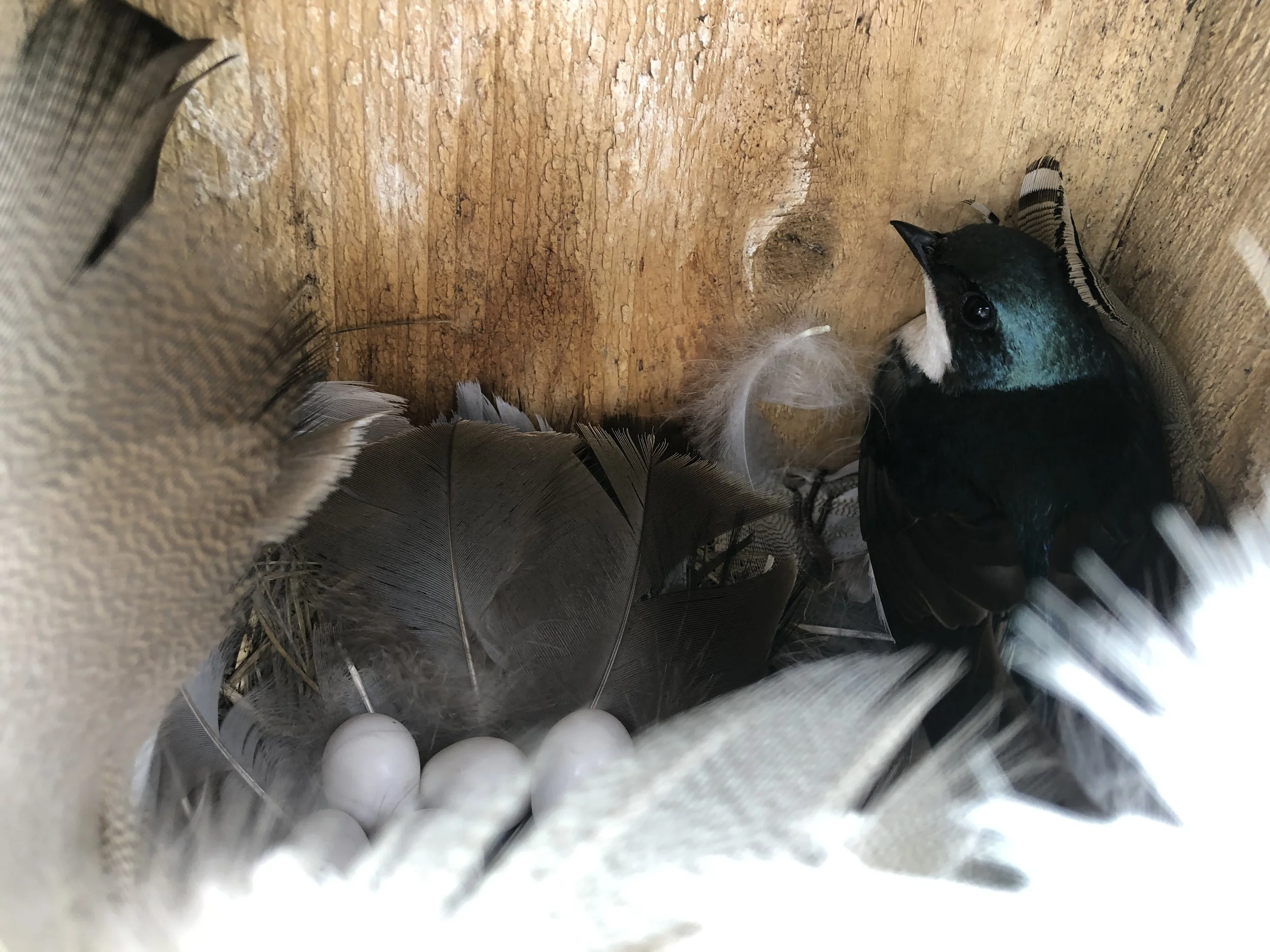
In 2023, the Central Algoma Land Trust partnered with researchers from the biology department at Algoma University to capture and band Tree Swallows nesting in these boxes on our nature preserves.
Bird banding is a process in which trained professionals attach a small, lightweight ring around a bird’s leg. Each band contains a unique combination of letters or numbers, allowing individual birds to be identified. Tracking individual birds helps scientists better understand behaviour, dispersal, migration patterns, and survival rates.
Banding is also an important conservation tool. Every time a banded bird is observed, researchers learn that the individual is still alive and that it is using that habitat for a reason. This information helps guide future conservation efforts.
During this partnership, a total of two female Tree Swallows were successfully banded. Each bird was carefully weighed, measured and inspected for general health parameters.
How to Get Involved
Volunteers are needed each year to help monitor and maintain the trail. Please note that this volunteer activity requires a significant time commitment. Bluebird boxes must be checked regularly and consistently to properly monitor their status. This opportunity is best suited for someone who lives close to the bluebird boxes, which are currently in the Desbarats area.
Responsibilities:
Check the status of bluebird box nesting sites every 3-4 days during breeding season (mid-May to mid-July).
Record observations in the provided data sheet or on the NestWatch app.
Follow the NestWatch Code of Conduct.
Time Commitment:
~2 visits per week.
1-2 hours of volunteer time per week from May to July.
If you know of any other bird nests, you can follow the same procedures we use and enter your observations into the same database. NestWatch offers a wide range of resources on their website to help you get started, including codes of conduct, protocols, monitoring manuals, data sheets, tutorials, and more!
Please note that monitoring nests in this way also requires a significant time commitment and consistent effort.
Results
While the boxes were installed in 2019, proper data collection from the boxes did not begin until 2023. Click the links below to read the summaries of each year since then!
Program Supporters
We are very grateful to our donors, whose general contributions provide the foundation for this program, and the organizations recognized here for directly supporting it.