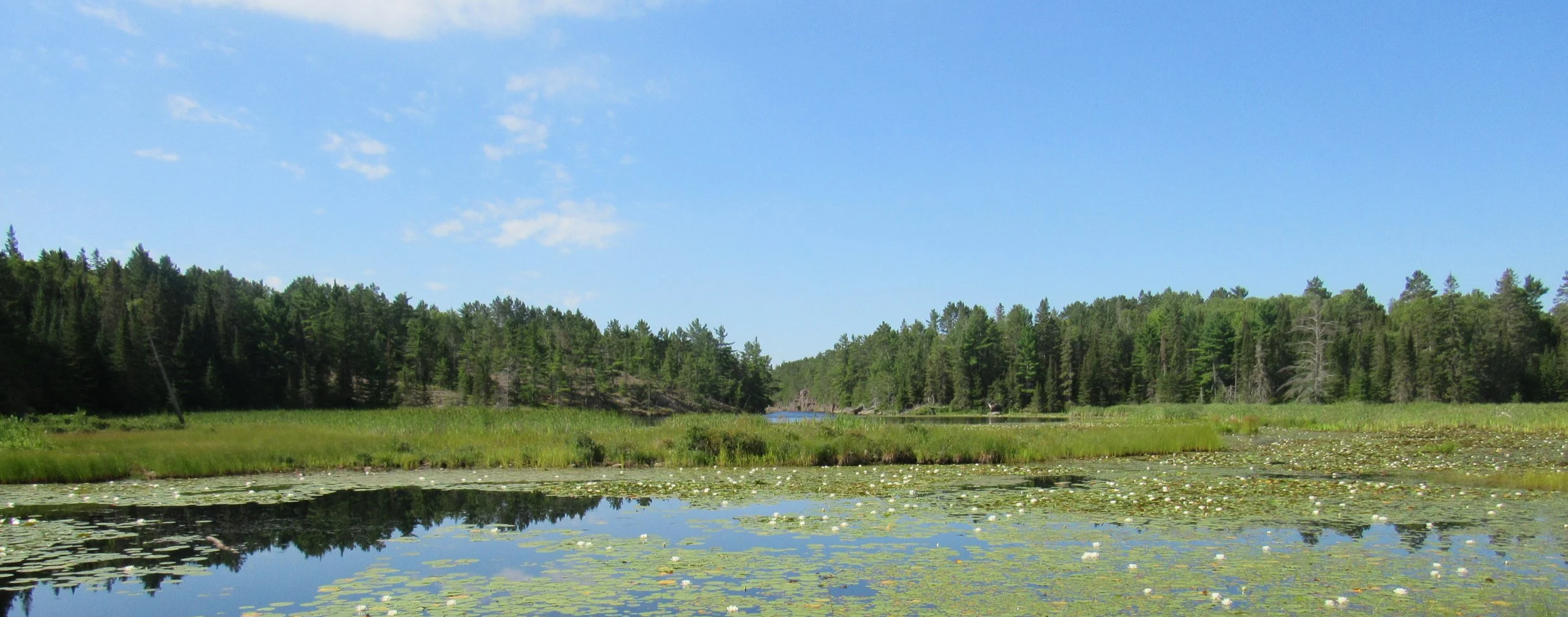
Salamander Board Program
Salamanders play a vital role in forest ecosystems and are highly sensitive to environmental change. As a result, changes in their populations can serve as an early warning system for habitat degradation. Because of this, we have established a monitoring program at our Gravel Point Preserve to keep track of salamander populations and gain insight into the preserve’s overall ecological health.
About the Prgram
In 2022, the Central Algoma Land Trust established an artificial salamander board plot at our Gravel Point Preserve as part of our monitoring efforts. This plot consists of twenty numbered wooden boards arranged in a grid like system. These boards are considered ‘artificial boards’ since they are not naturally occurring, however they have proven to be excellent habitat for salamanders, as well as for other small wildlife and insects. Formal surveys of these board began in 2024. In the future, we hope to expand this program to more of our protected areas.
Monitoring begins in early spring, when salamanders become more active, and we carefully check under each board. However, we only go out into the field when the weather is cool and moist, typically during or just after rainfall, as these conditions are ideal for salamander activity. Monitoring continues until mid-summer and ends when the weather starts to become more consistently warm and dry. Since salamanders rely on moisture to survive, it becomes too risky to their health to disturb the boards during this time.
When we observe a salamander using the boards, we record the species, what morph, its size, and what exact board it was under. Collecting this information allows us to track salamander population trends over time, monitor the overall health of those populations on the preserve, and monitor the health of the preserve itself by using salamanders as an indicator species.
Results
2026
First survey - 57 Eastern Red-blacked Salamanders
2025
First survey - 62 Eastern Red-backed Salamanders, 2 Blue-spotted Salamanders
Second survey - 32 Eastern Red-backed Salamanders
Third Survey - 56 Eastern Red-backed Salamanders
Fourth Survey - 29 Eastern Red-backed Salamanders, 1 Blue-spotted Salamander
Fifth Survey - 37 Eastern Red-backed Salamanders
2024
First survey - 21 Eastern Red-backed Salamanders, 3 Blue-spotted Salamanders
Second survey - 18 Eastern Red-backed Salamanders
Third Survey - 13 Eastern Red-backed Salamanders, 2 Blue-spotted Salamanders
Fourth Survey - 19 Eastern Red-backed Salamanders
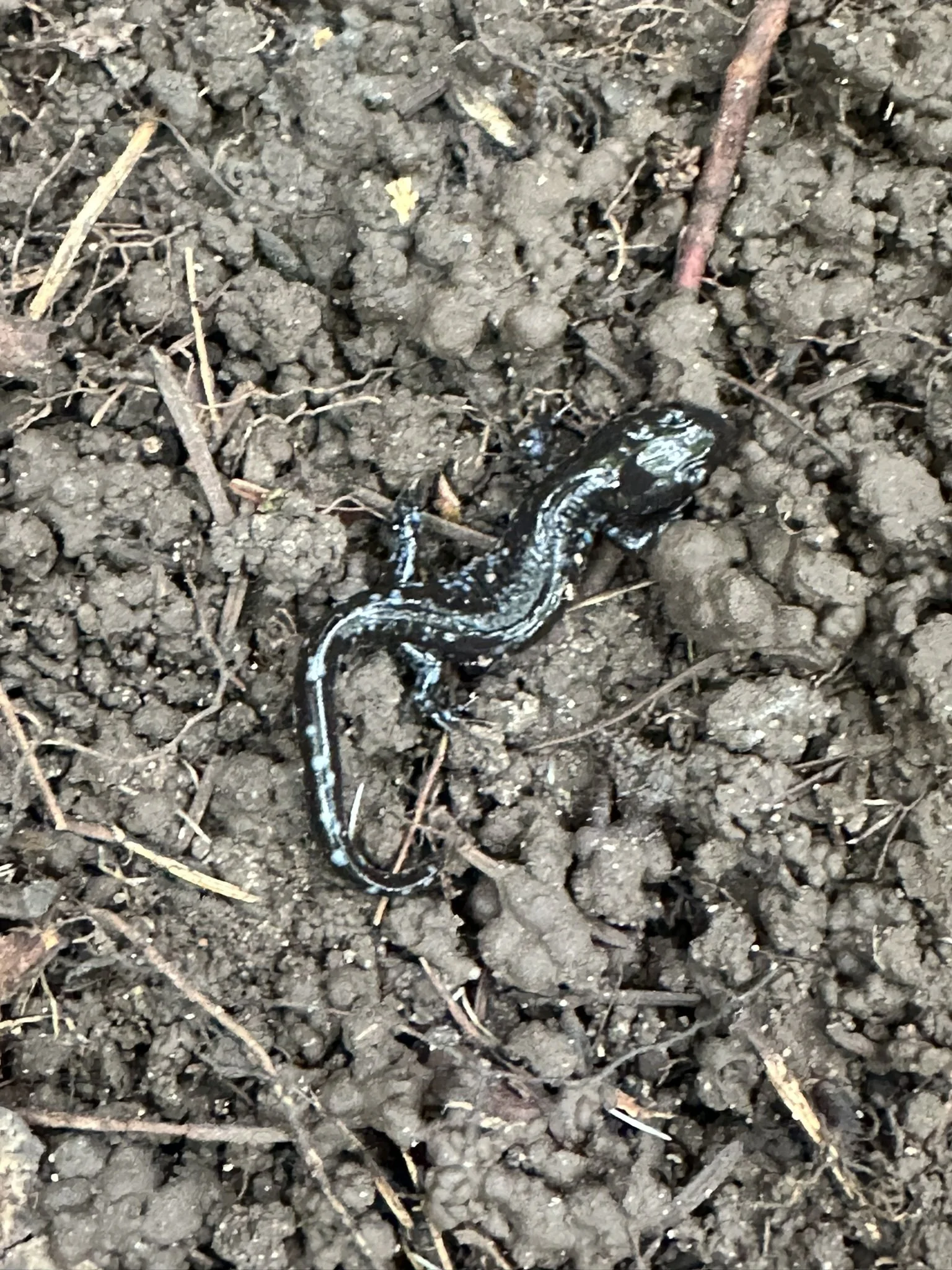
Blue-spotted Salamander
While we have observed an increasing trend in the number of salamanders using our boards, it would be premature to conclude that this reflects an overall improvement in the condition of Gravel Point Preserve. The boards typically require 1–2 years to become sufficiently weathered and established to be fully effective. Additionally, a minimum of five years of data is generally needed to identify statistically significant changes in salamander populations that could be reliably linked to the condition of the preserve.
Salamanders as Indicator Species
Salamanders play a critical role in forest ecosystems. They are an important part of food webs acting as prey, predators, and scavengers throughout all their life stages. They also help to cycle nutrients in both aquatic ecosystems, where they breed and lay their eggs, and in terrestrial ecosystems, where they spend most of their adult life. Because of this, when we see salamanders start to go missing, there is cause for concern.
Salamanders, like other amphibians, are considered exceptional indicator species. Indicator species are organisms whose presence, absence, and abundance can reveal information about the health of an ecosystem. Amphibian populations are valuable to track to gauge the health of ecosystems because they have very permeable skin, which makes them especially sensitive to changes in their surroundings. If an area has a healthy population of salamanders, the habitat is likely in good condition. Conversely, if salamanders are absent, the habitat may be considered degraded.
The Eastern Red-backed Salamander is a great example of an indicator species that is present in the Central Algoma region. Not only does it have permeable skin, but it is also lungless, and relies entirely on breathing through its skin. This makes it more vulnerable to environmental stressors. This is why in our Salamander Board Monitoring Program the Eastern Red-backed Salamander is one of our target species, and it also happens to be the species that we observe most frequently!
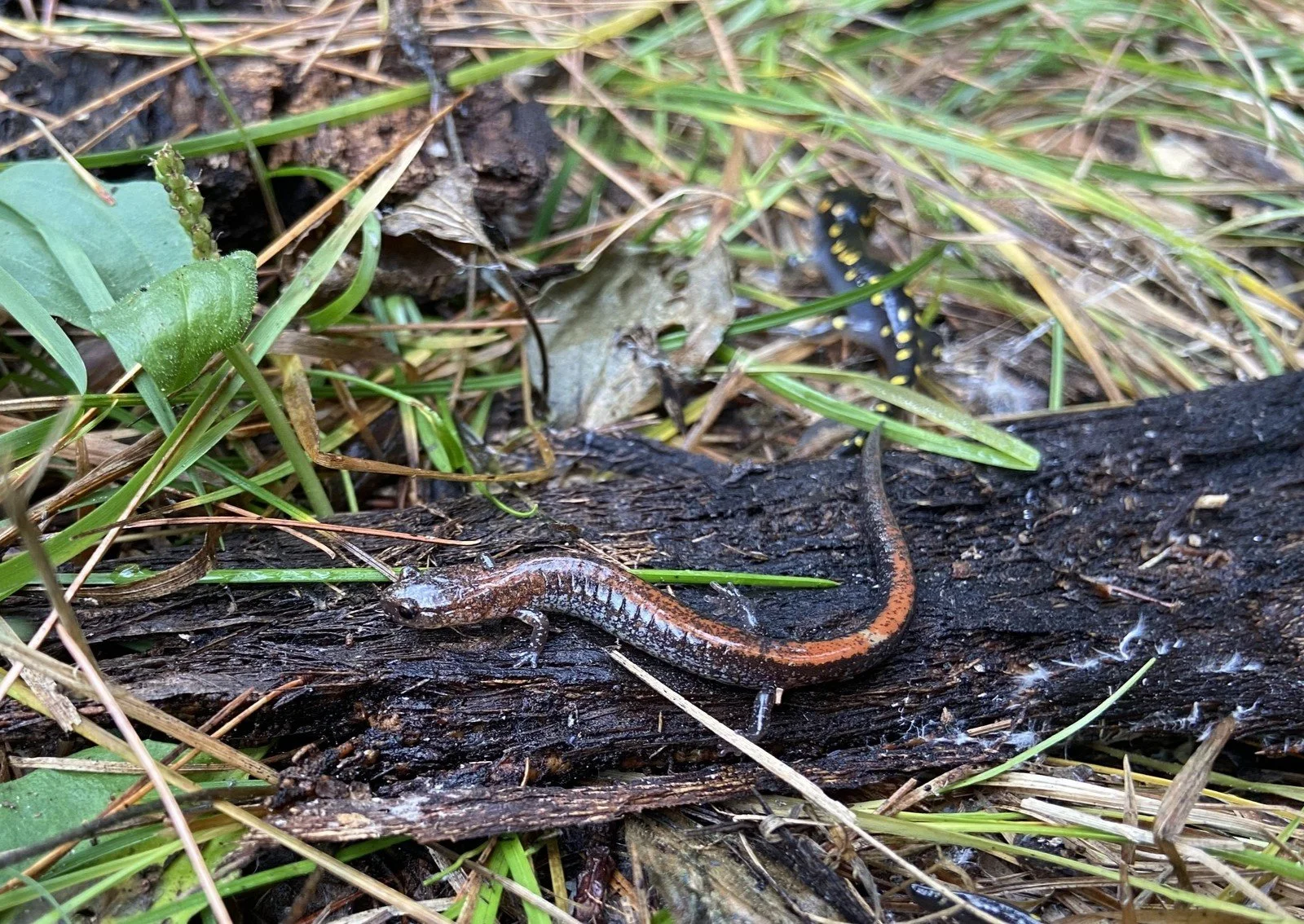
Eastern Red-backed Salamander with a Spotted Salamander in the background.
Did You Know?
Salamanders are actually one of the most abundant vertebrates in deciduous forests in North America. The total biomass of just Eastern Red-backed Salamanders alone is estimated to be similar or greater than the total biomass of White-tailed Deer in the same region. Although an individual deer weighs far more than a single three-inch-long salamander, the abundance of these amphibians makes up this weight difference. Therefore, It is important to monitor and protect these amphibians to ensure their abundance remains high.
Salamanders in Central Algoma
There are six species of salamanders that are known to be present in our region:
Eastern Red-backed Salamander (Plethodon cinereus)
Four-toed Salamander (Hemidactylium scutatum)
Spotted Salamander (Ambystoma maculatum)
Blue-spotted Salamander (Ambystoma lateral)
Eastern Newt (Notophthalmus viridescens)
Mudpuppy (Necturus maculosus)
If you come across a salamander, please report your sighting!
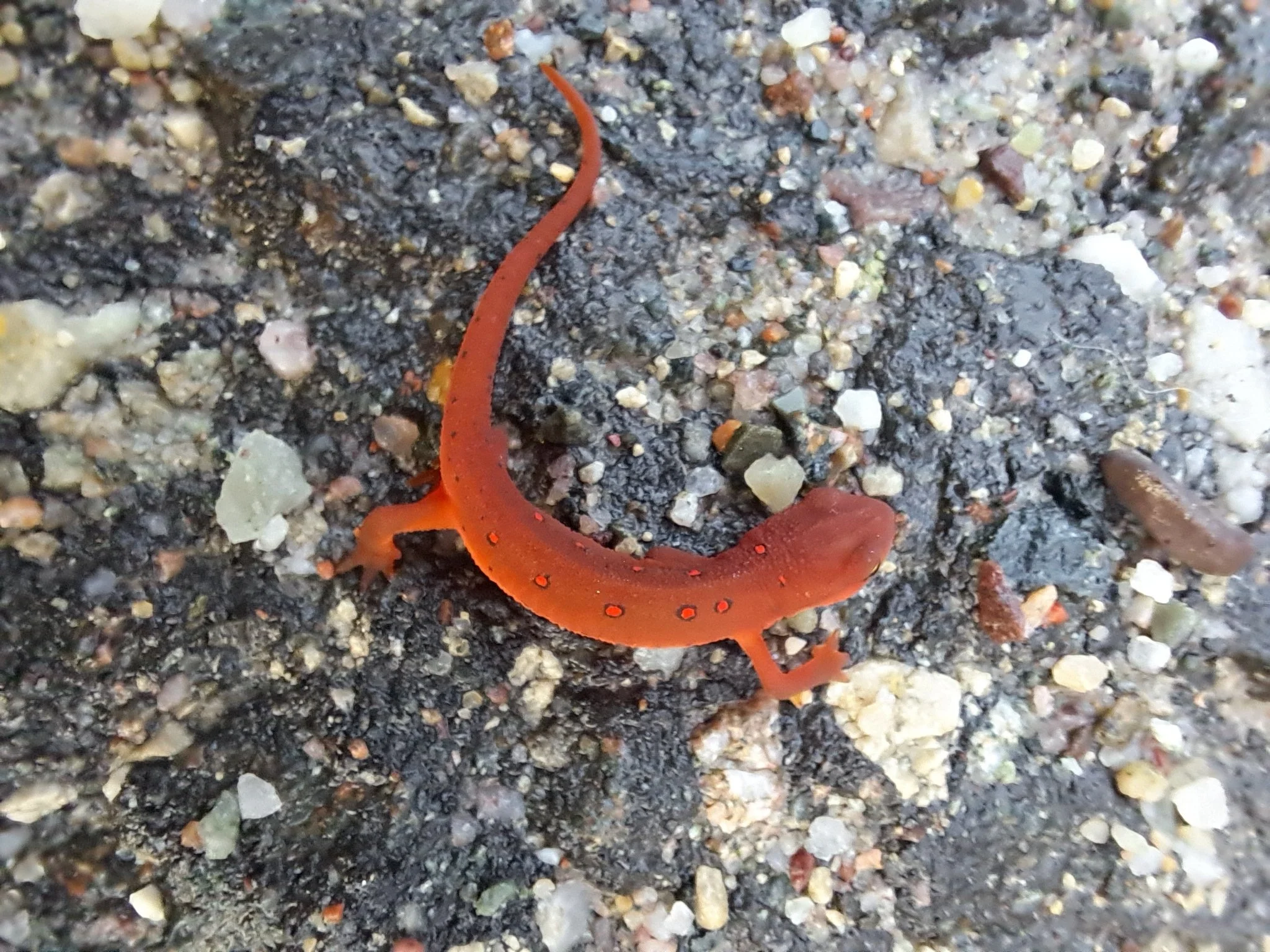
Eastern Newt
Threats to Salamanders
Road Mortality - Salamanders are quite small, which makes them difficult to spot from a moving vehicle. Many species also undertake long migrations to reach breeding pools, and habitat fragmentation from road development often forces them to cross multiple roads. Because they also move slowly, their chances of a safe crossing are further reduced.
Disease - Diseases such as ranavirus and chytrid fungus pose threats to Ontario salamanders and other amphibians. While the effects of chytrid fungus on salamanders are not as well understood as it is on frogs, it remains an important threat that should be closely monitored.
Pollution - Contamination of water sources from road salt has been shown to reduce survivorship in some salamander species, delay egg hatching, and increase deformities in hatchlings..
Invasive Species - One of the main reasons invasive species threaten native wildlife and ecosystems is their ability to quickly dominate new areas. For example, invasive phragmites species can rapidly spread in the shallow waterways that salamanders depend on, altering their habitat and forcing them to relocate.
Program Supporters
We are very grateful to our donors, whose general contributions provide the foundation for this program, and the organizations recognized here for directly supporting it.